Tooth loss that leaves you with few or no teeth in one jaw is common — and many patients ask whether they must wear removable dentures for life. All-on-4 is a full-arch implant approach that, for suitable people, can support a fixed set of teeth on four implants. This guide focuses on one question only: are you a candidate for All-on-4 implants?
This guide brings our earlier articles on All-on-4, All-on-6 and All-on-8 together in one place, so you can compare the options and see where you might fit.
What All-on-4 means in plain terms
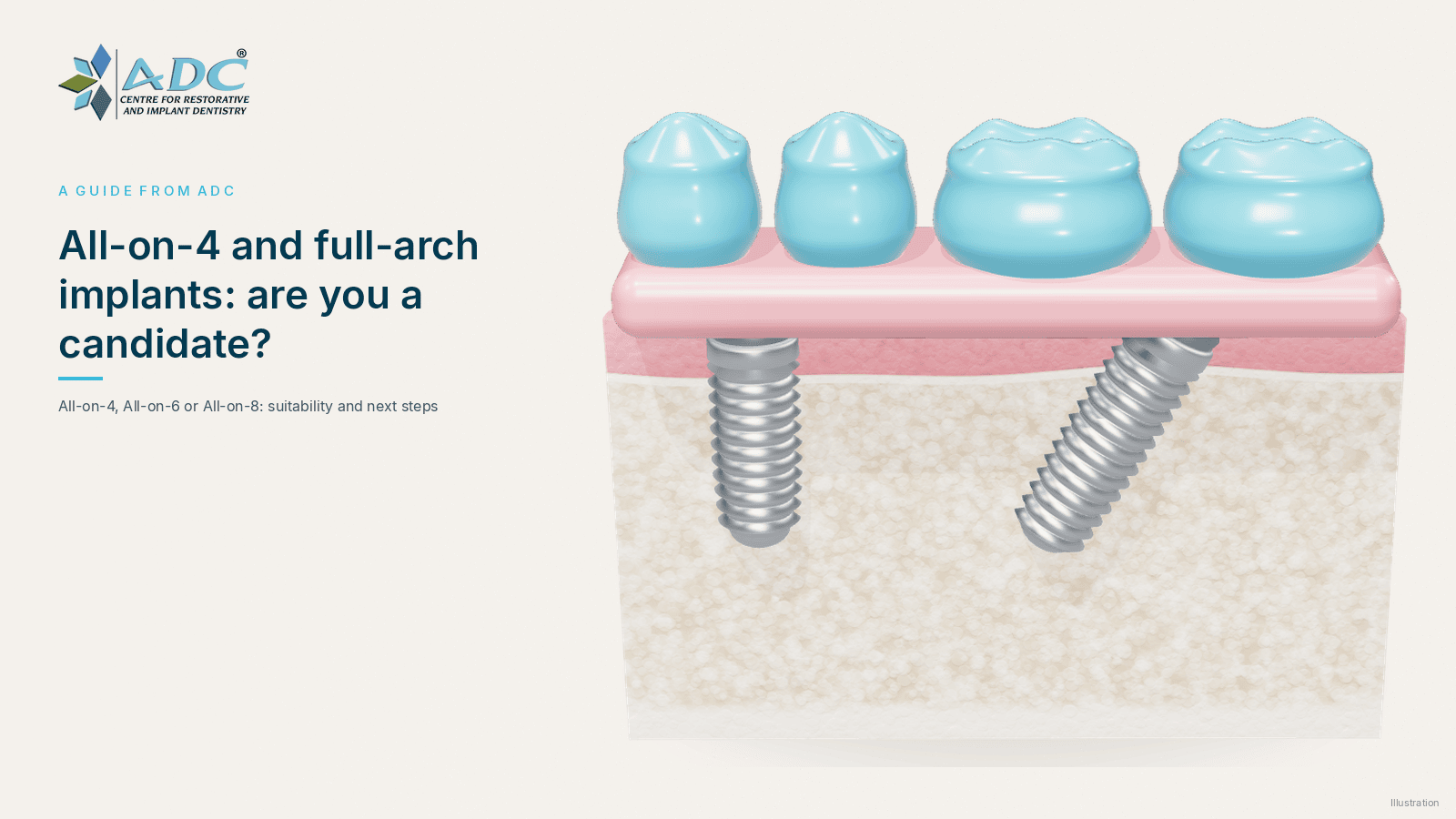
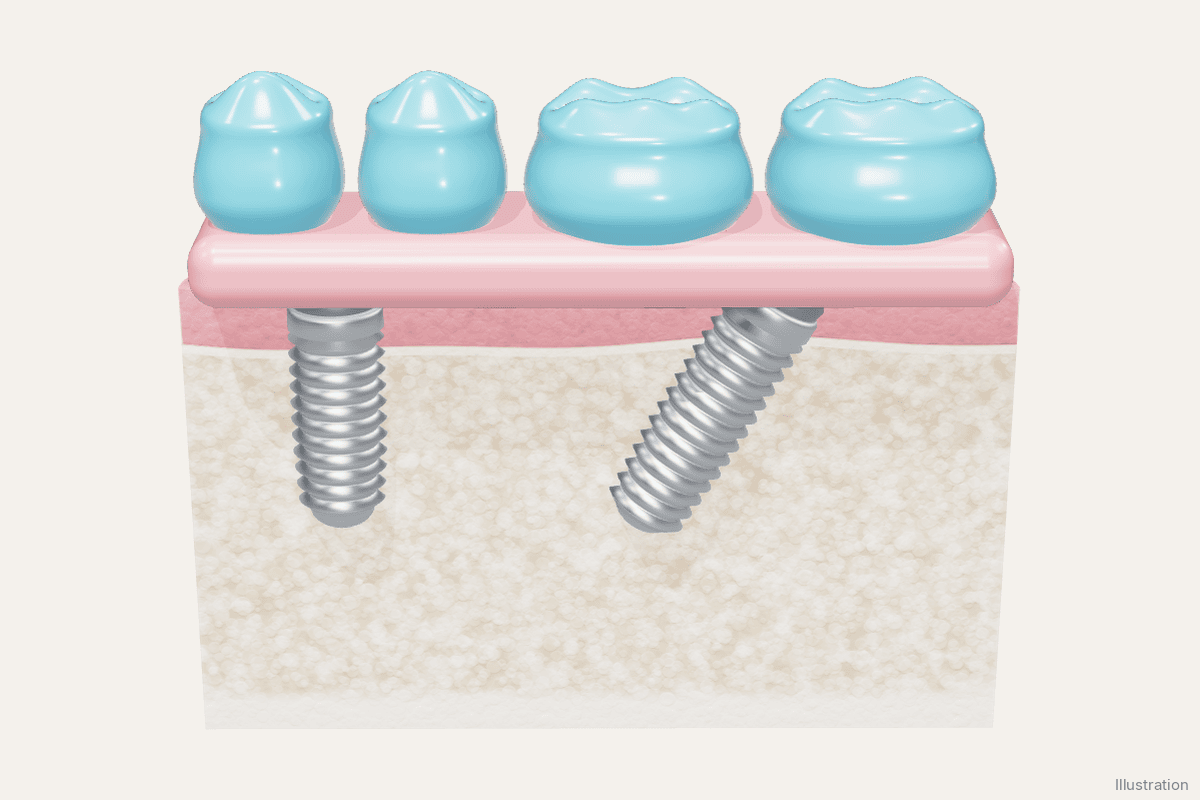
All-on-4 places four dental implants in one arch (upper or lower) to support a fixed full-arch prosthesis. In many plans, the back implants are angled to make use of available bone. The aim is a stable, non-removable set of teeth for people who have lost most or all teeth in that jaw — without placing one implant for every missing tooth.
It is not the same as a removable denture, and it is not automatically the right option for every patient with missing teeth. Suitability depends on health, bone, bite and goals.
How All-on-4 works
The All-on-4 treatment concept was developed by the Portuguese dental surgeon Dr. Paulo Maló in the 1990s. In a typical plan, the two front implants are placed upright and the two back implants are tilted (often up to about 45 degrees). Tilting the back implants lets them use the denser bone further forward and can avoid structures such as the sinus in the upper jaw or the nerve canal in the lower jaw. The implants are then joined by one fixed bridge that carries the full arch of teeth.
In many cases a provisional fixed bridge can be fitted soon after surgery, with the final bridge made once healing is complete. Whether that is possible depends on how stable the implants are when they are placed.
All-on-4, All-on-6 or All-on-8?
The number tells you how many implants support the full arch. The aim is the same in each case: a fixed set of teeth for a jaw with few or no healthy teeth left.
- All-on-4: four implants, with the back two usually tilted. It is often considered when bone is reduced at the back of the jaw, and it can reduce the need for bone grafting in selected cases.
- All-on-6: six implants. The load is spread over more implants, which may be preferred when there is good bone volume, a strong bite or a longer arch.
- All-on-8: eight implants, usually in the upper jaw with good bone. It spreads the load further and allows the bridge to be made in sections in some designs.
More implants are not automatically better. Each extra implant needs bone, adds surgery and adds cost. The right number depends on your bone, bite, jaw shape, health and budget, and is decided after a clinical examination and 3D imaging.
Who is often a good All-on-4 candidate?
You may be considered for All-on-4 after a clinical assessment if several of these apply:
- You have lost most or all teeth in the upper jaw, the lower jaw, or both.
- You struggle with loose or uncomfortable removable dentures.
- You want a fixed option rather than a plate you take out each night.
- You have enough bone in key areas of the jaw, or grafting/alternative implant plans can be discussed if bone is limited.
- You can commit to oral hygiene around implants and to regular reviews.
- Medical conditions that affect healing (for example uncontrolled diabetes or heavy smoking) can be managed or improved before surgery.
Low bone volume does not always rule All-on-4 out. Angled implant placement is designed, in selected cases, to use remaining bone and reduce the need for large grafts — but only imaging and an in-person exam can confirm this for you.
Who may need a different plan?
All-on-4 may not be the first recommendation if:
- You still have enough healthy teeth for a partial plan, bridges or fewer implants.
- Severe gum disease is active and not yet controlled.
- Bone volume or quality is too limited even for angled placement (other options may include grafting, zygomatic approaches in selected cases, or more implants).
- Medical risks make elective implant surgery unsafe until cleared by your physician.
- You prefer a removable denture or implant-supported overdenture for cost, maintenance or personal reasons.
A candidacy visit at ADC is about matching the plan to your mouth — not selling one protocol to everyone.
What happens at a candidacy consultation in Chandigarh?
At ADC – Centre for Restorative and Implant Dentistry (#1197 Sector 21-B, U.T, Chandigarh 160022), a typical All-on-4 assessment includes:
- Medical and dental history, medications and habits (including tobacco).
- Clinical exam of gums, remaining teeth, bite and jaw joints.
- Imaging as indicated (often including a 3D CBCT scan) to measure bone.
- Discussion of fixed full-arch options versus dentures or staged implants.
- A written outline of steps, healing time and aftercare — without quoting fees in this article (staff confirm costs at the clinic).
You can also read about dental implants with bone loss and our dental implants service page.
Practical advantages patients often ask about
When All-on-4 is appropriate, patients commonly value:
- Fewer implants than a tooth-by-tooth full-arch rebuild.
- Potential to avoid or reduce major bone grafting in selected cases.
- A fixed prosthesis that does not come out for meals (unlike a conventional denture).
- Clear home-care routines with brushes and interdental aids designed for implant bridges.
Healing time and whether teeth can be fitted provisionally on the same day vary by case. Your clinician will explain what is realistic for your bone and bite — not a one-size-fits-all timeline.
FAQ: All-on-4 candidacy
Is All-on-4 only for people with no teeth left?
It is most often planned when an arch has few or no salvageable teeth. Sometimes remaining teeth are removed as part of the plan if they cannot be kept healthily. That decision is clinical, not automatic.
Can I be a candidate if I already wear dentures?
Yes. Many All-on-4 patients switch from removable dentures because they want more stability. See also dentures vs implants.
Does bone loss stop me from being a candidate?
Not always. Bone is measured carefully. Some patients proceed with All-on-4; others need grafting, more implants, or another design.
How is this different from All-on-6 or All-on-8?
All-on-6 and All-on-8 use six or eight implants for the arch and may be preferred when there is enough bone and the bite needs more support. See "All-on-4, All-on-6 or All-on-8?" above.
Book an All-on-4 candidacy visit
If you are considering All-on-4 implants in Chandigarh, book a consultation with Dr. Mohit Dhawan’s team:
- Online booking: ADC Zoho Bookings
- Phone: +91-7087800016
- Email: help@theadc.dental
- Clinic: #1197 Sector 21-B, U.T, Chandigarh 160022
Mon–Fri 10:00 AM–6:30 PM (as published); Sat 10:00 AM–5:00 PM; Sunday closed.
Reviewed by Dr. Mohit Dhawan.
References
- Maló P, et al. — All-on-4 literature overview — PubMed search: All-on-4 dental implants
- American Dental Association patient topic — Dental implants (MouthHealthy)
- Taruna et al. — Prosthodontic perspective of All-on-4 — PMC5778838
- Indian Dental Association — ida.org.in



 International Team for Implantology
 ISO 9001:2015 Certified
 OHSAS Certified
 Academy of Osseo-Integration
 Indian Prosthodontics Society
 Indian Endodontic Society
 Women Implantology Network
 Indian Dental Association






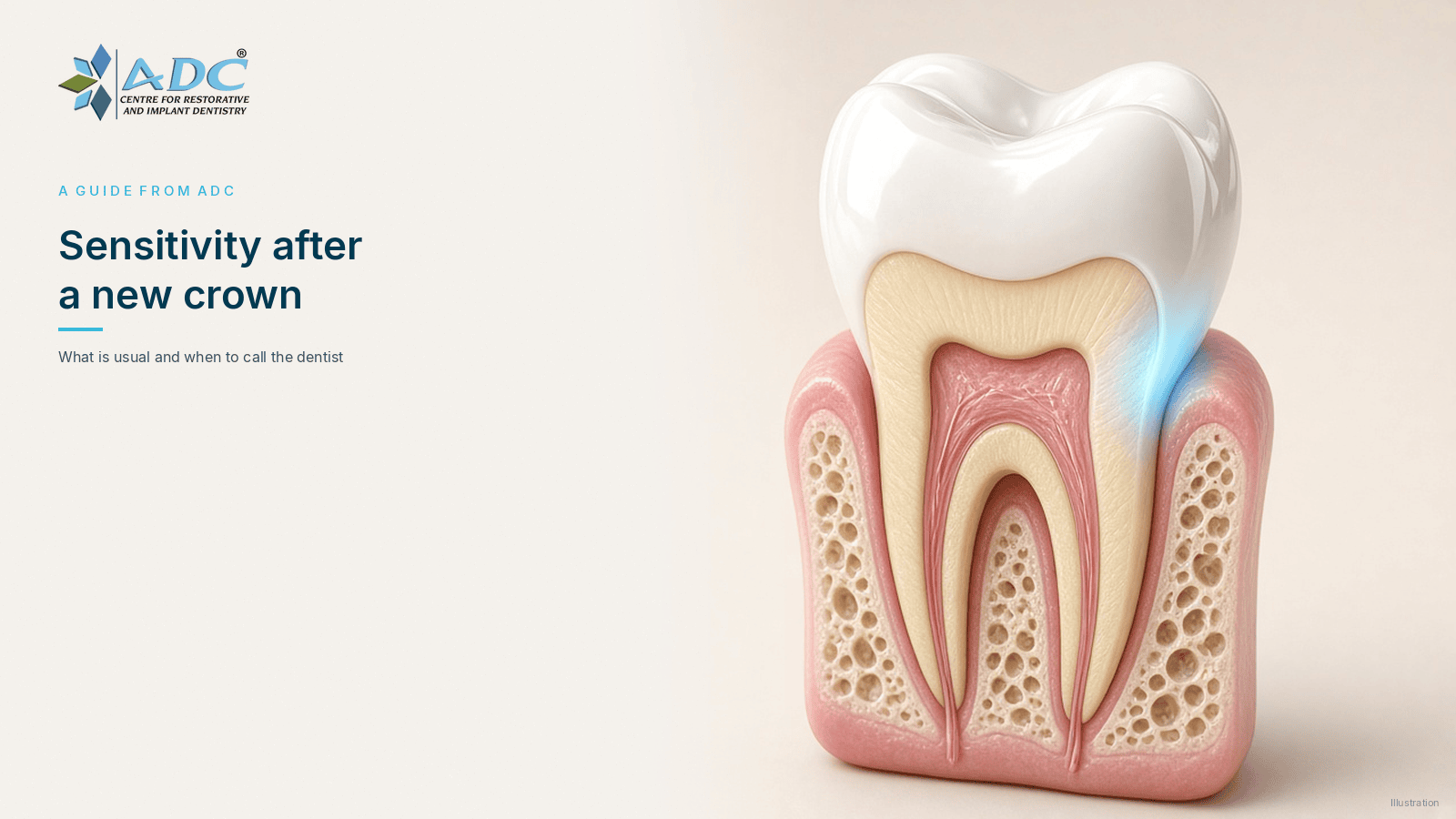 Sensitivity after a new crown: what is usual and when to call the dentist
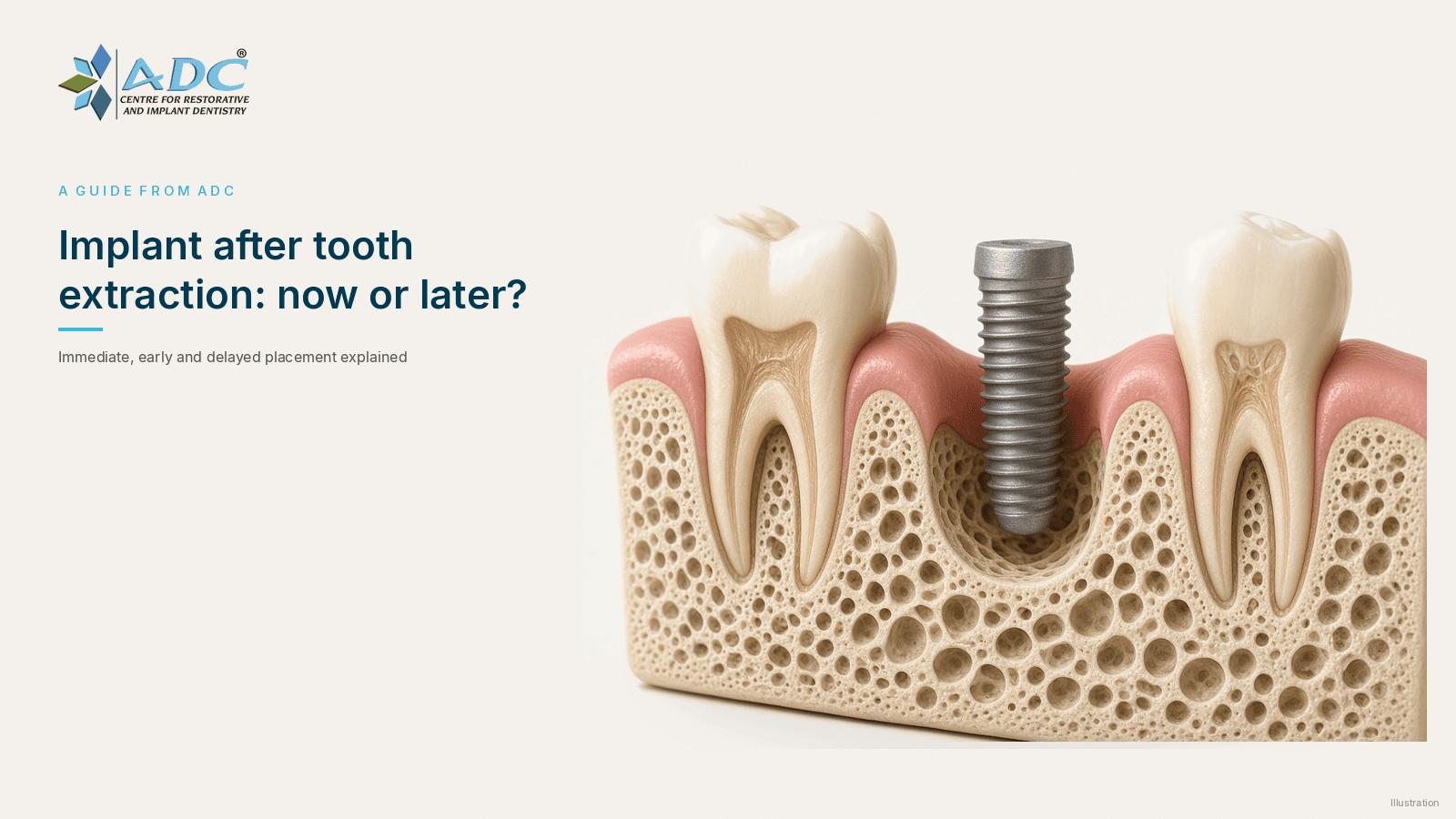 Dental implant after tooth extraction: immediate or delayed placement?
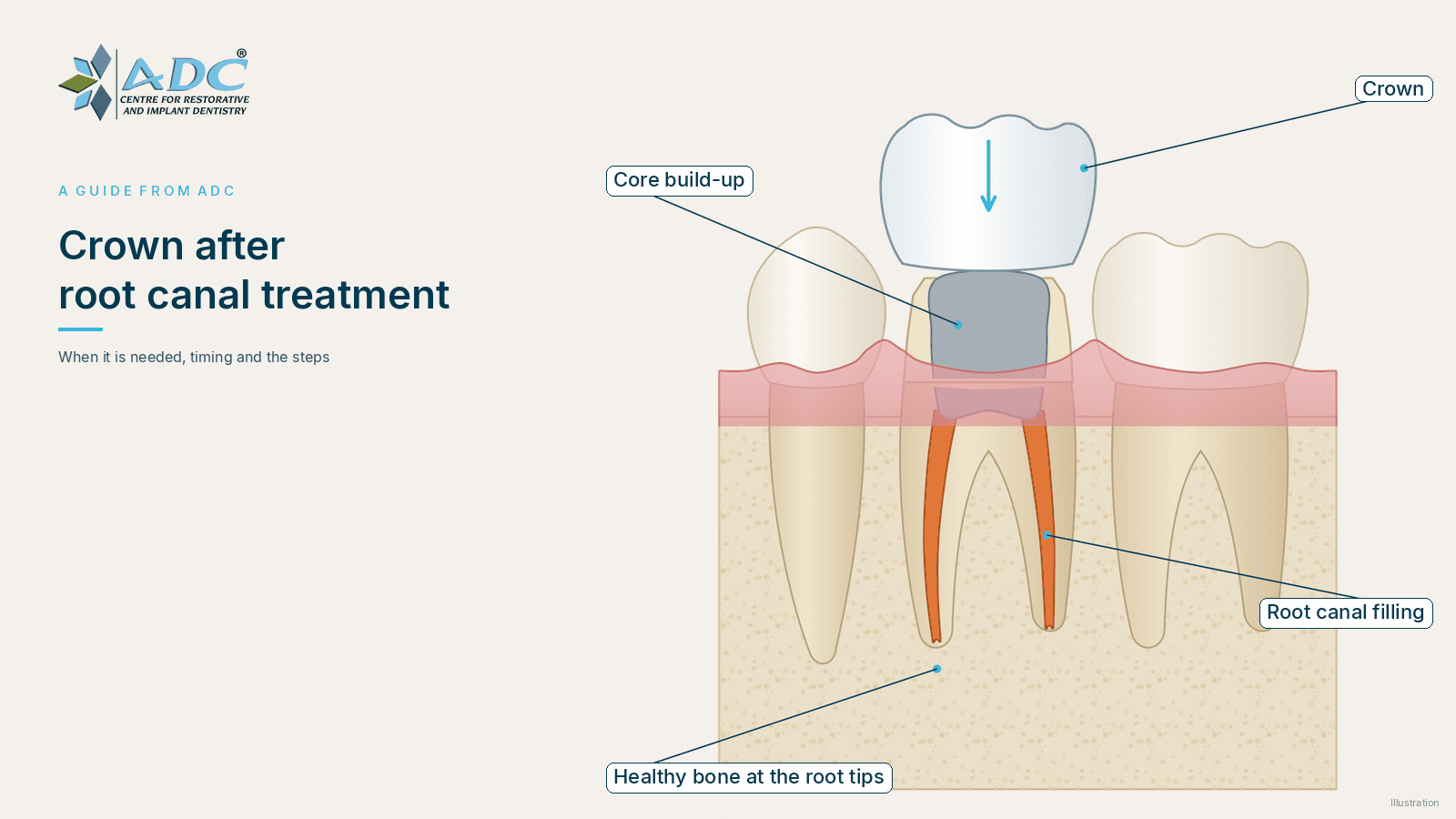 Do you need a crown after root canal treatment?