What Are Dental Implants?
Key Benefits of Dental Implants
Permanent and long-lasting solution
Look and feel like natural teeth
Prevent bone loss in the jaw
No slipping or movement while eating or speaking
Do not affect neighbouring teeth
With proper care, dental implants can last 15–25 years or even a lifetime.
Considerations
Higher upfront cost
Minor surgical procedure required
Healing time of 3–6 months
Requires sufficient bone density
Implants are ideal for patients looking for a fixed, long-term solution and who have good oral and overall health.
What Are Dentures?
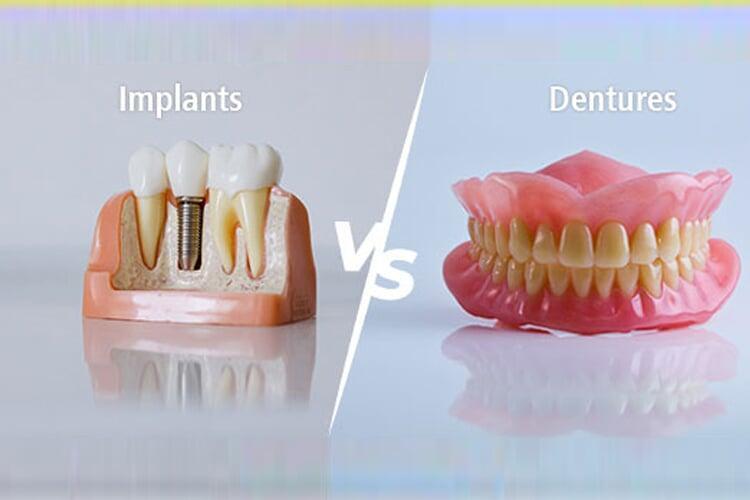
Dentures are removable prosthetic devices designed to replace missing teeth. They can be full (replacing all teeth) or partial (replacing some teeth).
Modern dentures are more comfortable and natural-looking than older versions.
Key Benefits of Dentures
More affordable than implants
Non-surgical solution
Faster treatment timeline
Suitable for patients with significant bone loss
Dentures can restore basic chewing function and improve appearance significantly.
Considerations
May feel bulky initially
Can slip or move while speaking/eating
Require removal and cleaning daily
May need replacement every 5–8 years
Do not prevent bone loss
Appearance and Comfort Comparison
Dental implants closely mimic natural teeth. They are fixed in place, meaning you won’t feel movement or discomfort once healed. Most patients forget they even have implants.
Dentures, although improved, may require an adjustment period. Some people experience minor irritation or difficulty speaking during the initial days.
Functionality and Chewing Efficiency
Chewing strength with dental implants is nearly 90–95% of natural teeth. You can comfortably eat most foods, including hard or crunchy items.
Dentures provide around 50–60% chewing efficiency compared to natural teeth. Certain foods like nuts, sticky candies, or tough meats may be challenging.
Bone Health and Facial Structure
One of the biggest differences lies in jawbone preservation.
When a tooth is lost, the jawbone underneath begins to shrink over time. Dental implants stimulate the bone just like natural roots, preventing bone loss and maintaining facial structure.
Dentures sit on top of the gums and do not stimulate the bone. Over time, bone shrinkage can change facial appearance, leading to a sunken look.
If maintaining facial structure and long-term oral health is important, implants have a clear advantage.
Cost Comparison
Dentures are initially more affordable. However, they may require periodic adjustments, relining, or replacement.
Dental implants have a higher upfront cost but are often more cost-effective in the long run due to their durability and lower maintenance needs.
Who Is a Good Candidate for Dental Implants?
You may be suitable for implants if:
You have healthy gums
You have adequate jawbone density
You are in good overall health
You do not smoke heavily
You want a permanent solution
Who Should Consider Dentures?
Dentures may be better if:
You prefer a non-surgical option
You have significant bone loss
You have certain medical conditions preventing surgery
You are looking for a lower initial cost
Hybrid Option: Implant-Supported Dentures
There is also a middle-ground solution: implant-supported dentures. These combine the stability of implants with the coverage of dentures, offering better comfort and reduced slipping.
Final Thoughts – Which Is Right for You?
There is no one-size-fits-all answer. The best choice depends on your:
Oral health condition
Budget
Lifestyle preferences
Long-term expectations
If you prioritize durability, comfort, and bone health, dental implants are often the superior choice. If you want an affordable, quicker solution without surgery, dentures may be appropriate.
The most important step is consulting an experienced dentist who can evaluate your oral health and guide you toward the best personalized solution.