Tooth decay, also known as dental caries, is one of the most common oral health problems affecting people of all ages. It begins silently but can lead to pain, infection, and even tooth loss if left untreated. The good news is that tooth decay is largely preventable with the right knowledge and habits.
Understanding the root causes is the first step toward protecting your teeth for life.
What is Tooth Decay?
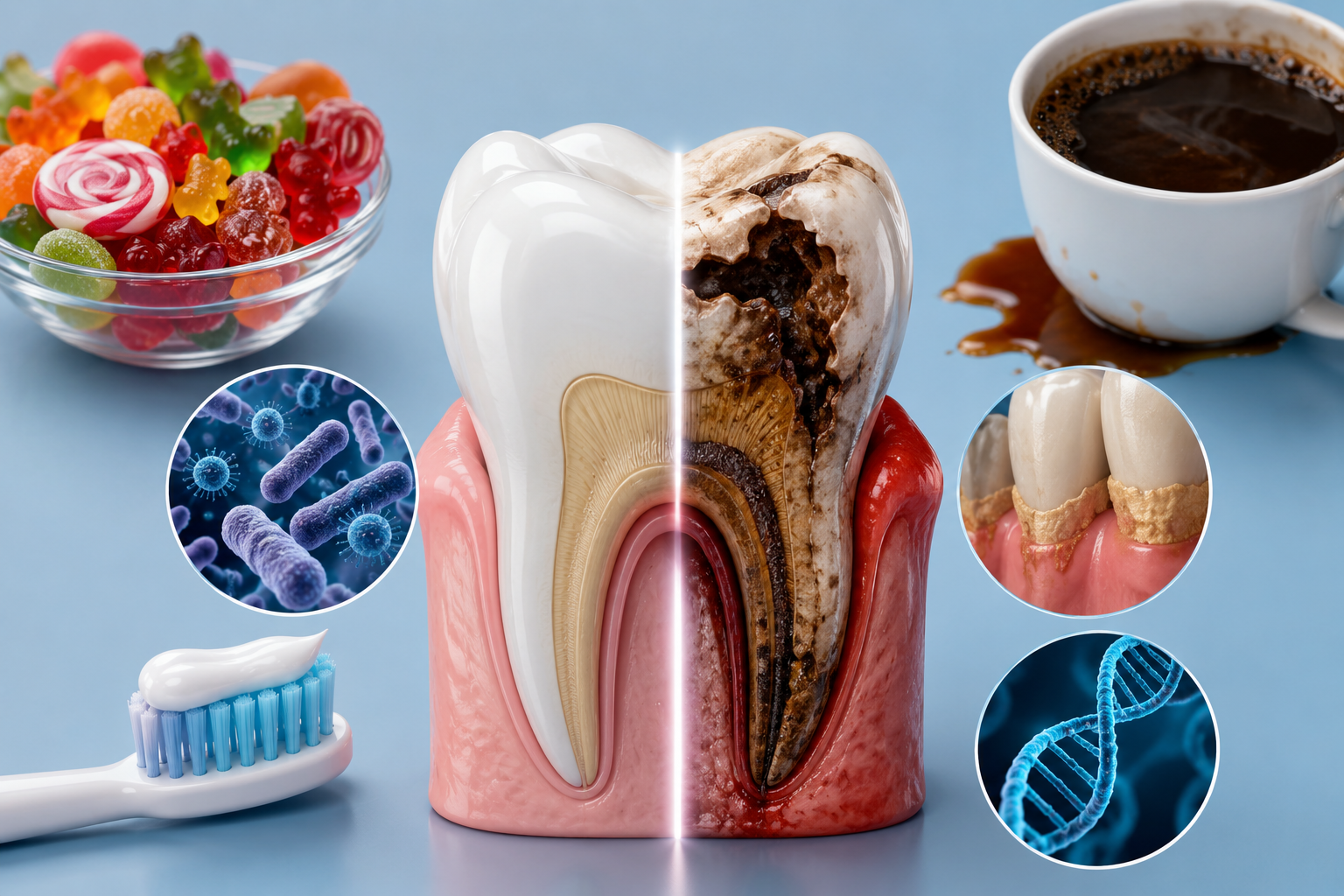
Tooth decay occurs when harmful bacteria in the mouth produce acids that attack the tooth enamel. Over time, this leads to cavities—small holes in the teeth that can worsen if not treated.
Poor Oral Hygiene
One of the leading causes of tooth decay is inadequate brushing and flossing. When food particles are not removed properly, they form plaque—a sticky layer of bacteria that clings to the teeth.
How to Prevent:
- Brush your teeth twice daily with fluoride toothpaste
- Floss at least once a day
- Use a soft-bristled toothbrush and replace it every 3 months
Consistent oral hygiene removes plaque before it can cause damage.
Excessive Sugar Consumption
Sugary foods and drinks are a major contributor to tooth decay. Bacteria feed on sugar and produce acids that erode tooth enamel.
Common Culprits:
- Sweets and chocolates
- Soft drinks and packaged juices
- Sticky foods like caramel and toffees
- Limit sugar intake
- Rinse your mouth or brush after consuming sugary foods
- Opt for healthier snacks like fruits and nuts
Reducing sugar exposure significantly lowers the risk of cavities.
Plaque and Tartar Buildup
If plaque is not removed, it hardens into tartar (calculus), which cannot be cleaned by regular brushing. Tartar provides a surface for more bacteria to grow, increasing the risk of decay and gum disease.
How to Prevent:
- Maintain regular brushing and flossing
- Schedule professional dental cleanings every 6 months
- Use antibacterial mouthwash if recommended
Professional cleaning helps remove stubborn deposits that brushing cannot.
Dry Mouth (Lack of Saliva)
Saliva plays a crucial role in protecting your teeth by washing away food particles and neutralizing acids. A dry mouth increases the risk of decay.
Causes of Dry Mouth:
- Dehydration
- Certain medications
- Medical conditions
How to Prevent:
- Stay well-hydrated
- Chew sugar-free gum to stimulate saliva
- Avoid excessive caffeine and alcohol
Keeping your mouth moist helps maintain a natural defense against bacteria.
Frequent Snacking
Eating frequently throughout the day, especially sugary or starchy foods, exposes your teeth to constant acid attacks. This reduces the time your enamel has to recover.
How to Prevent:
- Limit snacking between meals
- Choose tooth-friendly snacks like cheese or nuts
- Maintain proper meal timings
Additional Risk Factors
Apart from the main causes, certain factors can increase your risk:
- Poorly aligned teeth (harder to clean)
- Lack of fluoride
- Smoking or tobacco use
- Ignoring regular dental checkups
Being aware of these can help you take extra precautions.
Early Signs of Tooth Decay
Recognizing early symptoms can prevent serious damage:
- White or brown spots on teeth
- Tooth sensitivity
- Pain while eating sweets or hot/cold foods
- Bad breath
If you notice any of these signs, consult a dentist promptly.
The Role of Fluoride in Prevention
Fluoride strengthens tooth enamel and helps reverse early stages of decay. It is commonly found in toothpaste, mouth rinses, and sometimes drinking water.
Using fluoride-based products regularly is one of the simplest ways to protect your teeth.
Tooth decay may be common, but it is also highly preventable. By maintaining good oral hygiene, limiting sugar intake, staying hydrated, and visiting your dentist regularly, you can significantly reduce your risk.
Healthy teeth are not just about a beautiful smile—they are essential for your overall health and quality of life. Small daily habits can make a big difference in keeping your teeth strong and cavity-free for years to come.
A proactive approach today can save you from painful dental problems tomorrow—start taking care of your teeth no