A tooth extraction is a common dental procedure, but proper aftercare is essential for smooth recovery and faster healing. One of the most important parts of post-extraction care is choosing the right foods. Eating the wrong foods too soon can irritate the extraction site, delay healing, or even lead to complications such as dry socket.
Understanding what to eat — and what to avoid — after a tooth extraction can help reduce discomfort and support a healthy recovery process.
Why Your Diet Matters After Tooth Extraction
After a tooth is removed, a blood clot forms in the empty socket to protect the bone and nerves underneath. This clot plays a critical role in healing. Certain foods or eating habits can disturb the clot and cause pain or infection.
A soft, nutritious diet helps:
* Protect the extraction site
* Reduce irritation and swelling
* Promote faster tissue healing
* Lower the risk of complications
* Make chewing more comfortable
For the first few days, it is important to avoid putting pressure on the treated area.
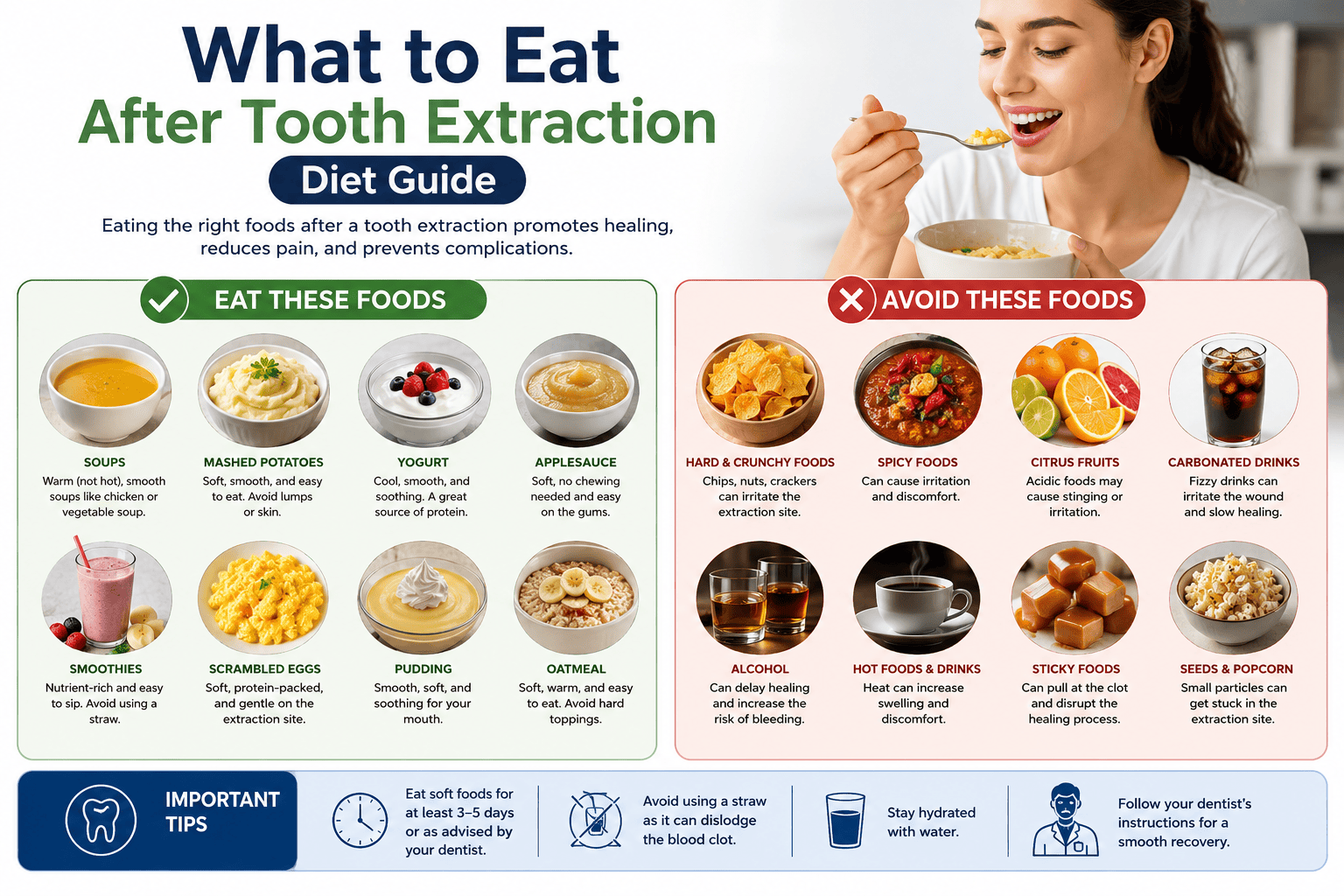
Foods to Eat Immediately After Tooth Extraction
During the first 24 hours, focus on soft, cool, and easy-to-swallow foods that require little or no chewing.
Yogurt
Yogurt is smooth, soft, and rich in protein and probiotics, making it an excellent post-extraction food.
Smoothies
Fruit smoothies can provide vitamins and hydration. However, avoid using straws, as suction may dislodge the blood clot.
Applesauce
Applesauce is gentle on the mouth and easy to eat without chewing.
Ice Cream
Cold foods like ice cream may help reduce swelling and provide temporary comfort. Choose soft varieties without nuts or crunchy toppings.
Mashed Potatoes
Soft mashed potatoes are filling, nutritious, and easy to consume after dental surgery.
Soups
Warm (not hot) soups such as tomato soup, pumpkin soup, or blended vegetable soup are soothing and easy to swallow.
Best Foods for the Next Few Days
As healing progresses, you can gradually add slightly more solid but still soft foods to your diet.
Scrambled Eggs
Eggs are rich in protein and soft enough to eat comfortably.
Oatmeal
Soft oatmeal is nutritious and easy on sensitive gums.
Cottage Cheese
Cottage cheese provides calcium and protein without requiring much chewing.
Soft Pasta
Well-cooked pasta or noodles can be eaten once chewing becomes easier.
Rice
Soft rice can usually be added after a few days if there is minimal discomfort.
Steamed Vegetables
Soft-cooked vegetables such as carrots, potatoes, or squash are gentle and nutritious.
Foods to Avoid After Tooth Extraction
Certain foods can interfere with healing or irritate the extraction site. Dentists usually recommend avoiding the following until healing improves.
Crunchy Foods
Chips, popcorn, nuts, and crackers can get stuck in the extraction site and disrupt healing.
Hard Foods
Hard candies, raw vegetables, and tough meats may place pressure on the area and cause pain.
Spicy Foods
Spices may irritate the wound and increase discomfort.
Hot Foods and Drinks
Very hot foods or beverages can dissolve the blood clot prematurely.
Sticky Foods
Important Eating Tips After Extraction
In addition to choosing the right foods, certain eating habits can help prevent complications.
Avoid Using Straws
Suction from straws can dislodge the blood clot and lead to dry socket, which can be very painful.
If possible, chew food away from the extraction site to minimize irritation.
Stay Hydrated
Eat Slowly
Take small bites and avoid rushing while eating.
Maintain Oral Hygiene Carefully
Keep your mouth clean according to your dentist’s instructions while avoiding direct disturbance of the extraction area.
How Long Should You Follow a Soft Diet?
Most people need to follow a soft-food diet for at least 3–7 days, depending on the complexity of the extraction and individual healing speed.
Wisdom tooth extractions or surgical removals may require a longer recovery period. Your dentist will guide you on when it is safe to return to normal foods.
Signs of Healing Problems
- Severe or worsening pain
- Persistent bleeding
- Swelling that increases after several days
- Fever
- Foul taste or odor in the mouth
- Difficulty swallowing
These symptoms may indicate infection or dry socket.
Eating the right foods after a tooth extraction is an important part of recovery. A soft, nutritious diet helps protect the healing area, reduces discomfort, and lowers the risk of complications.
Choosing gentle foods like yogurt, soups, mashed potatoes, smoothies, and eggs can make the healing process smoother and more comfortable. At the same time, avoiding crunchy, spicy, and hard foods helps protect the extraction site during recovery.
With proper aftercare, good nutrition, and following your dentist’s instructions, most people heal comfortably and return to normal eating habits within a short time.