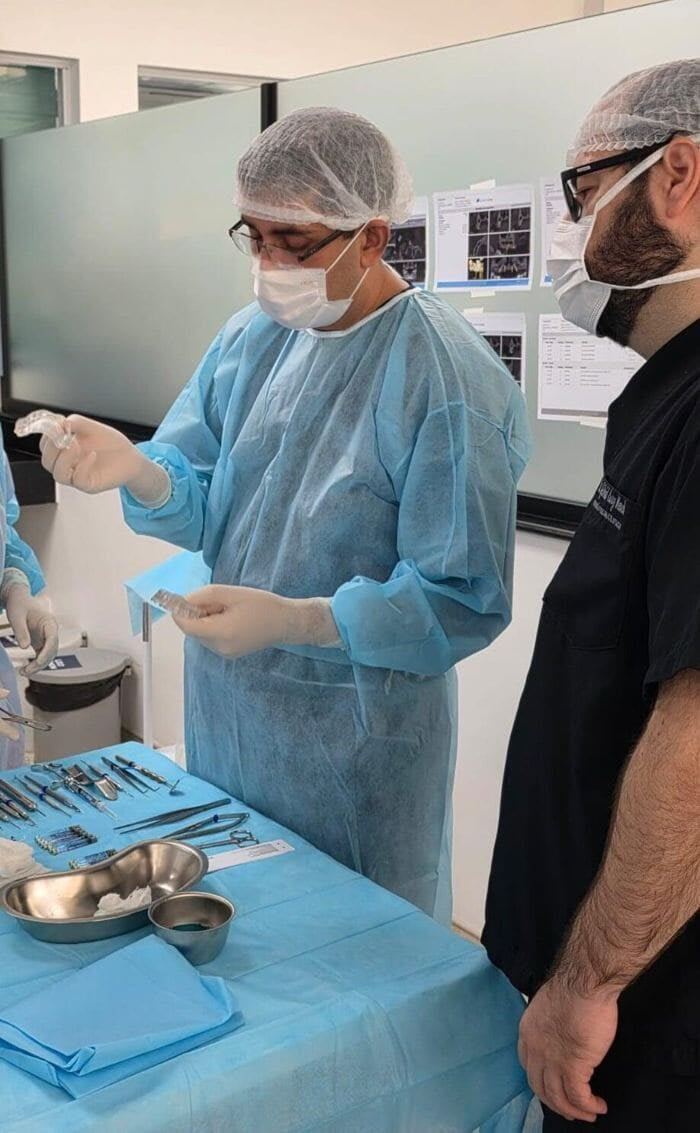
Choosing the dentist who plans and places your dental implants is an important part of implant treatment. An implant is a long-term commitment: it needs careful planning, a well-made crown or denture on top and years of maintenance. This guide explains how to choose a dental implant specialist: who places implants in India, what to check before you decide, the questions to ask at your consultation and the warning signs to watch for, whether you are looking for an implant specialist in Chandigarh or anywhere else.
Who places dental implants in India?
In India, dental implants may be placed by dentists with different training:
- Prosthodontists – specialists in replacing missing teeth with crowns, bridges, dentures and implant-supported teeth. In India, this specialty is called Prosthodontics and Crown & Bridge, and implant prosthodontics is part of the training.
- Periodontists – specialists in the gums and the bone that supports the teeth, including implant surgery and the care of the tissues around implants.
- Oral and maxillofacial surgeons – specialists in surgery of the mouth, jaws and face, including complex bone grafting.
- General dentists who have completed additional training in implant dentistry.
A specialist has completed a Master of Dental Surgery (MDS) in that field after the Bachelor of Dental Surgery (BDS). Some clinics have one clinician who plans, places and restores the implant; others work as a team. The surgery and the final tooth should be planned together from the start, so that the implant is placed where the crown or denture needs it.
How to choose a dental implant specialist: what to check
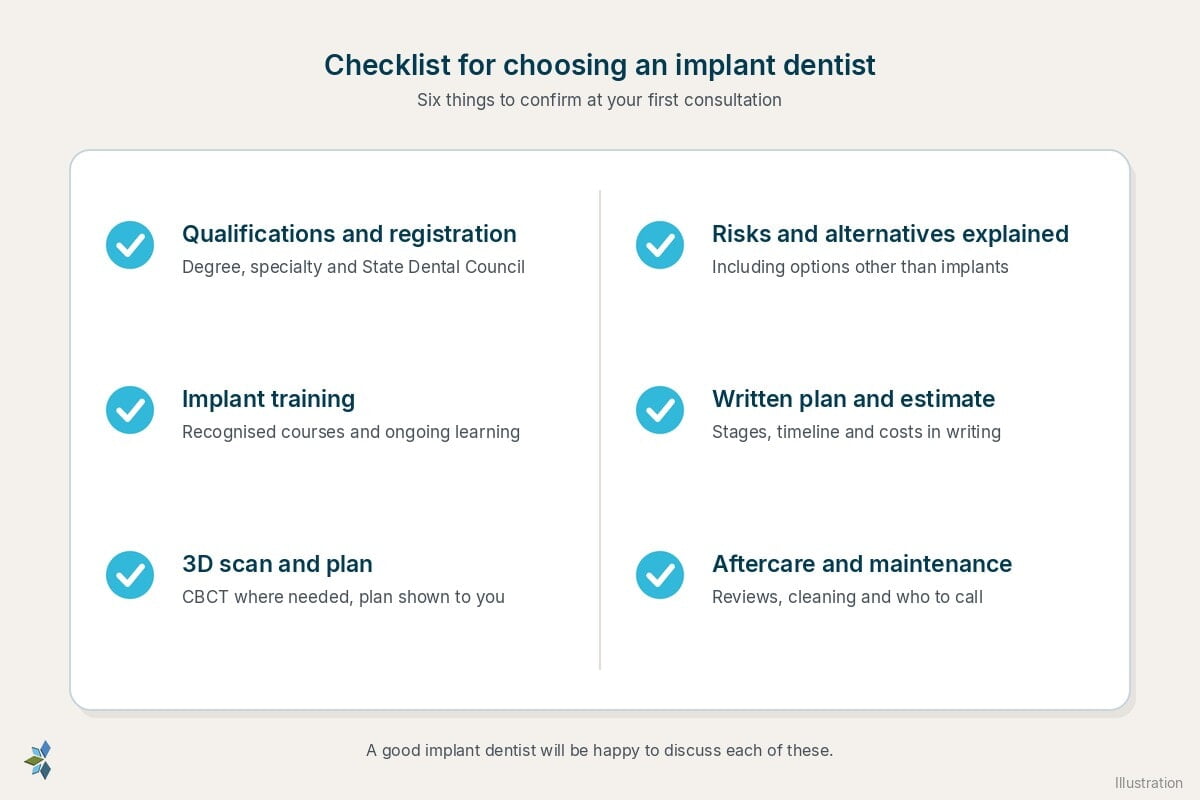
Illustration: six things to check before you choose an implant dentist. Not a patient photograph.
1. Qualifications and registration
Ask about the dentist's degrees and specialty, and check that they are registered with the State Dental Council. Clinic websites and profile pages usually list qualifications, and you can ask at the consultation. You can also confirm registration with the State Dental Council rather than relying on a website alone.
2. Training and experience in implant dentistry
Implant dentistry is learned through structured courses, supervised clinical work and ongoing education. Membership or fellowship of a recognised implant organisation, such as the International Team for Implantology (ITI) or the International Congress of Oral Implantologists (ICOI), can show a commitment to continuing education. It does not replace a recognised qualification or supervised implant training. It is also reasonable to ask how often the dentist treats cases like yours, for example a single front tooth, several missing back teeth or a full arch.
3. A thorough assessment and 3D planning
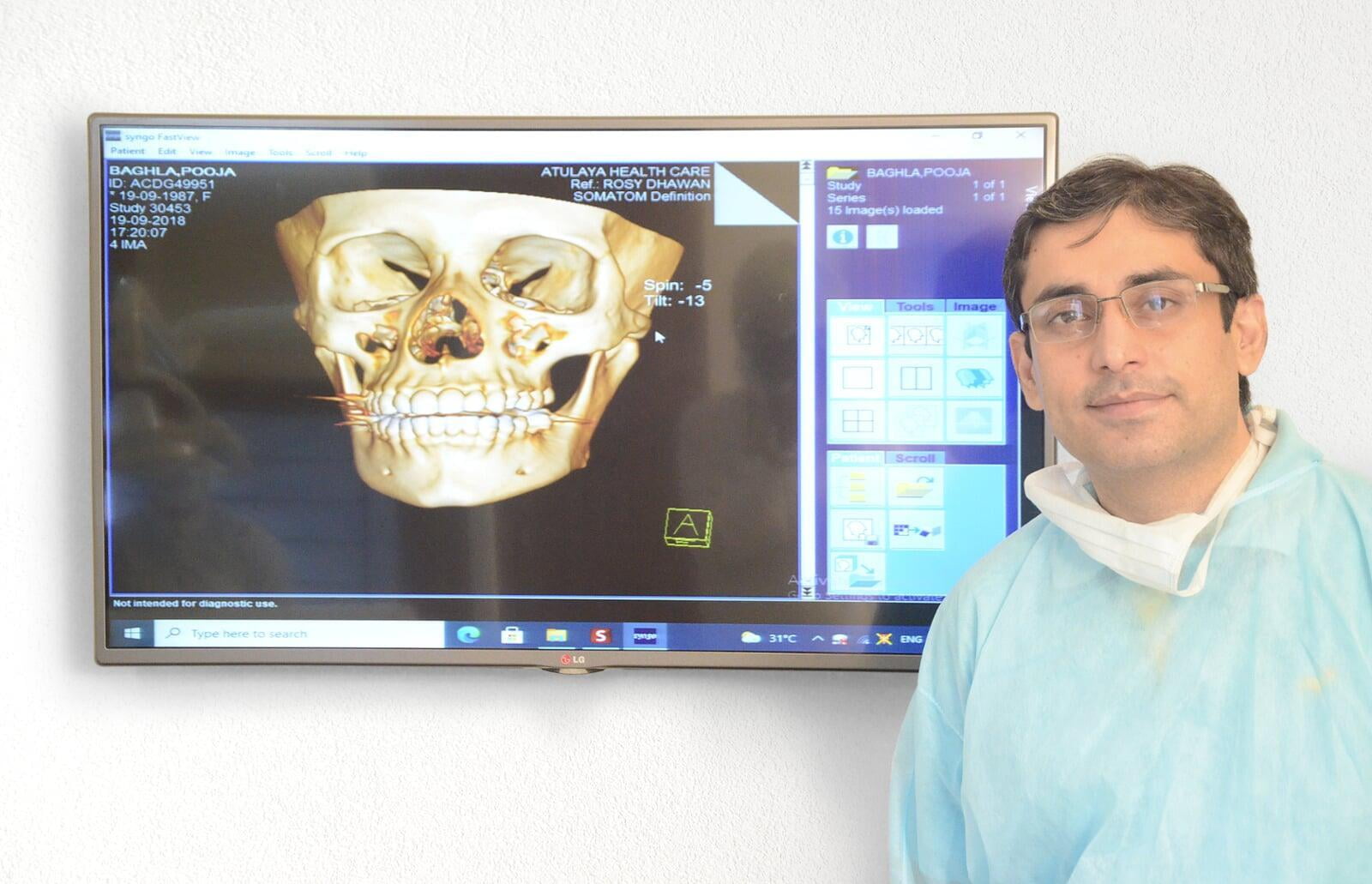
Before implant surgery, the dentist should take your medical history, examine your teeth and gums, and treat any gum disease or decay first. A 3D cone beam CT (CBCT) scan is often used to measure the bone and locate the nerve and sinus, and a surgical guide may be used to place the implant in the planned position. If there is not enough bone, the dentist should explain options such as bone grafting or a sinus lift. Read more about dental implants with bone loss.
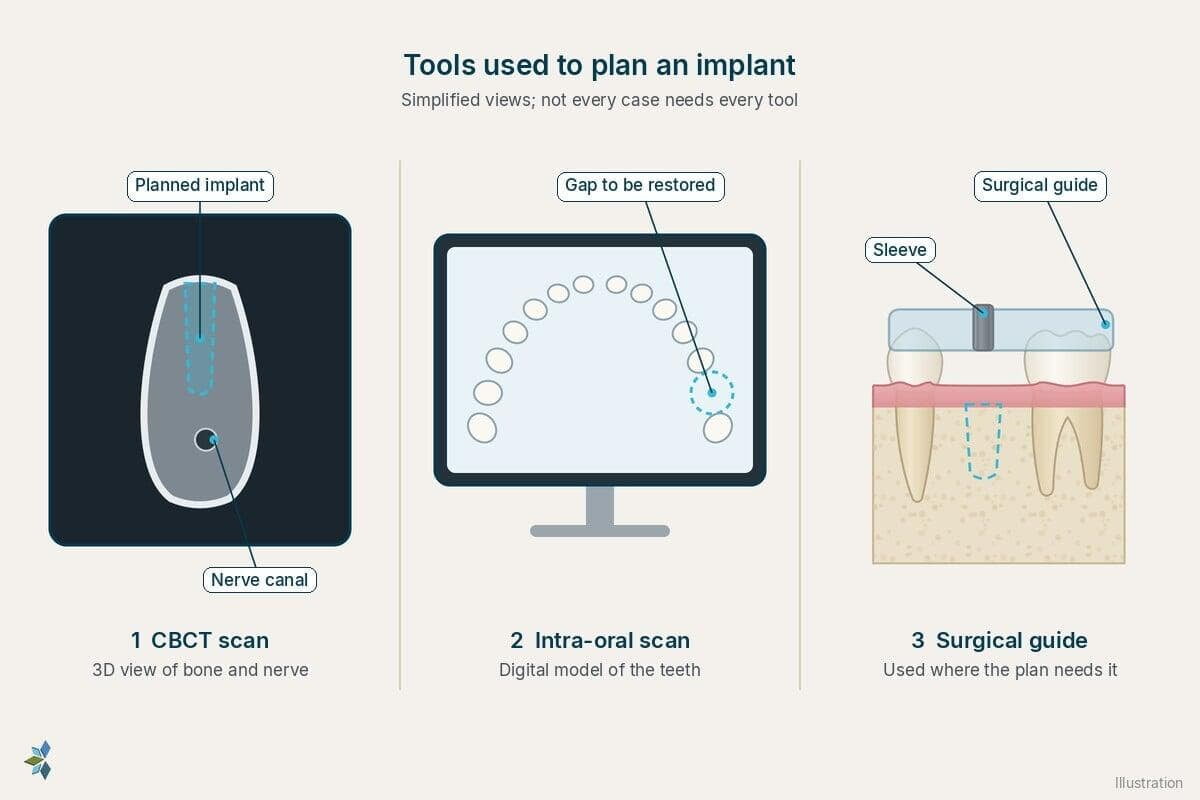
Illustration: a CBCT scan, a digital scan of the teeth and a surgical guide can help plan the implant before surgery. Which tools are needed depends on the case. Simplified. Not a patient photograph.
4. A clear explanation of options, risks and alternatives
A good implant dentist explains whether you are a suitable candidate, the steps and timeline, the possible risks and what happens if something does not go to plan. They should also explain alternatives, such as a bridge or a denture, so that you can make an informed choice. See why replacing missing teeth matters and our tooth replacement page.
5. The implant system and your records
Ask which implant system will be used. An established system with good research behind it, and parts that will remain available, makes future repairs and maintenance easier. Ask for a record of the implant brand and size; this is useful if you ever need treatment elsewhere. Read why Straumann dental implants.
6. A written plan and estimate
You should receive a written treatment plan with an estimate that shows what is included: the scan, the implant, any grafting, the abutment (the connector between the implant and the tooth), the temporary and final teeth, and review visits. Compare what is included rather than the headline price alone. See our cost of dental implants post.
7. Hygiene and sterilisation
Implant surgery needs strict infection control. It is reasonable to ask how instruments are sterilised and how the surgical area is prepared.
8. Aftercare and maintenance
Implants need regular check-ups and professional cleaning, just as natural teeth do. The gum around an implant can still become inflamed, so maintenance is part of long-term care. Ask who will review your implant after treatment, how often, and what to do if a problem occurs. Read common implant complications and how to avoid them and our home care tips for dental implants.
Questions to ask an implant dentist at your consultation
- What are your qualifications, and what training have you had in implant dentistry?
- How often do you treat cases like mine?
- Am I a suitable candidate? Is there anything in my health or habits that increases the risk?
- Do I need a CBCT scan, bone grafting or a sinus lift?
- Which implant system do you use, and will I get a record of it?
- What are the steps, how many visits are needed, and how long will treatment take?
- Will I have a temporary tooth while the implant heals?
- What does the estimate include, and what could change it?
- What are my alternatives to an implant?
- What aftercare and check-ups will I need?
Warning signs
Be cautious if a clinic:
- offers a guarantee that the implant will never fail, or describes implants as completely risk-free
- pressures you to decide or pay on the same day
- does not examine your gums or take the X-rays or scans needed for your case
- does not explain the risks or the alternatives
- gives a price without explaining what it includes
Reviews and recommendations from people you know can help, but they cannot replace a proper consultation. For major treatment, a second opinion is reasonable.
Implant treatment at ADC, Chandigarh
At ADC – Centre for Restorative and Implant Dentistry, dental implants are placed by Dr. Mohit Dhawan, a prosthodontist and implantologist with a Master of Dental Surgery (MDS) in Prosthodontics, Crown & Bridge and Implantology. He is a Fellow of the International Team for Implantology (ITI) and a member of the International Congress of Oral Implantologists (ICOI), and has placed over 6000 dental implants. Read why choosing a specialist prosthodontist matters.
Treatment starts with an examination and a review of your health, and uses a 3D CBCT scan and a surgical guide where needed. ADC works with the Straumann implant system. You receive a written treatment plan and estimate, and the risks and alternatives are explained before you decide. Learn more on our dental implants in Chandigarh page and in our complete guide to dental implants. If you are travelling for treatment, see our page for international patients. The clinic is in Sector 21, Chandigarh, within easy reach of Mohali, Panchkula and Zirakpur.
For dentists: the ADC E-Learning Hub offers the Basic Implantology Course and Beyond Osseointegration.
Frequently asked questions
Which specialist should place my dental implants?
Prosthodontists, periodontists and oral and maxillofacial surgeons all train in implant dentistry, and many general dentists complete further implant training. More important than the title is the dentist's training and experience with cases like yours, a thorough assessment, and a plan that covers both the surgery and the final tooth.
Is a prosthodontist an implant specialist?
A prosthodontist specialises in replacing missing teeth, including crowns, bridges and dentures on implants, and implant dentistry is part of the training. Many prosthodontists also place implants.
Should I get a second opinion before dental implants?
It is reasonable for any major treatment, especially if the plan involves several implants or grafting, or if you are unsure about the recommendation.
Are dental implants safe?
For many healthy adults, implants are a well-established treatment. They still involve surgery and some risks, and they are not suitable for everyone. Read are dental implants safe? Myths and facts.
How much do dental implants cost?
The fee depends on the number of implants, any grafting and the type of crown, and is explained in a written estimate after your consultation. See our cost of dental implants post. Instalment and financing options are available; ask our team for details.
Book a consultation in Chandigarh
This article is general information, not advice for any individual. Please speak with your dentist about your own situation. If you are considering dental implants and would like a detailed assessment and plan, you are welcome to book a consultation with Dr. Mohit Dhawan at ADC – Centre for Restorative and Implant Dentistry:
- Online booking: ADC Zoho Bookings
- Phone: +91-708-780-0016
- Email: help@theadc.dental
- Clinic: ADC- Centre for Restorative and Implant Dentistry, 1197, Sector 21B, Sector 21, Chandigarh, 160022, India
Mon–Fri 10:00 AM–6:30 PM; Sat 10:00 AM–5:00 PM; Sunday closed. You can also request a consultation online.
Reviewed by Dr. Mohit Dhawan, MDS (Prosthodontics, Crown & Bridge and Implantology).
References
- American Academy of Periodontology. Dental implant procedures — perio.org
- Cleveland Clinic. Dental implants — my.clevelandclinic.org
- International Team for Implantology (ITI) — iti.org
- International Congress of Oral Implantologists (ICOI) — icoi.org
- Dental Council of India — dciindia.gov.in





 International Team for Implantology
 ISO 9001:2015 Certified
 OHSAS Certified
 Academy of Osseo-Integration
 Indian Prosthodontics Society
 Indian Endodontic Society
 Women Implantology Network
 Indian Dental Association






 Sensitivity after a new crown: what is usual and when to call the dentist
 Dental implant after tooth extraction: immediate or delayed placement?
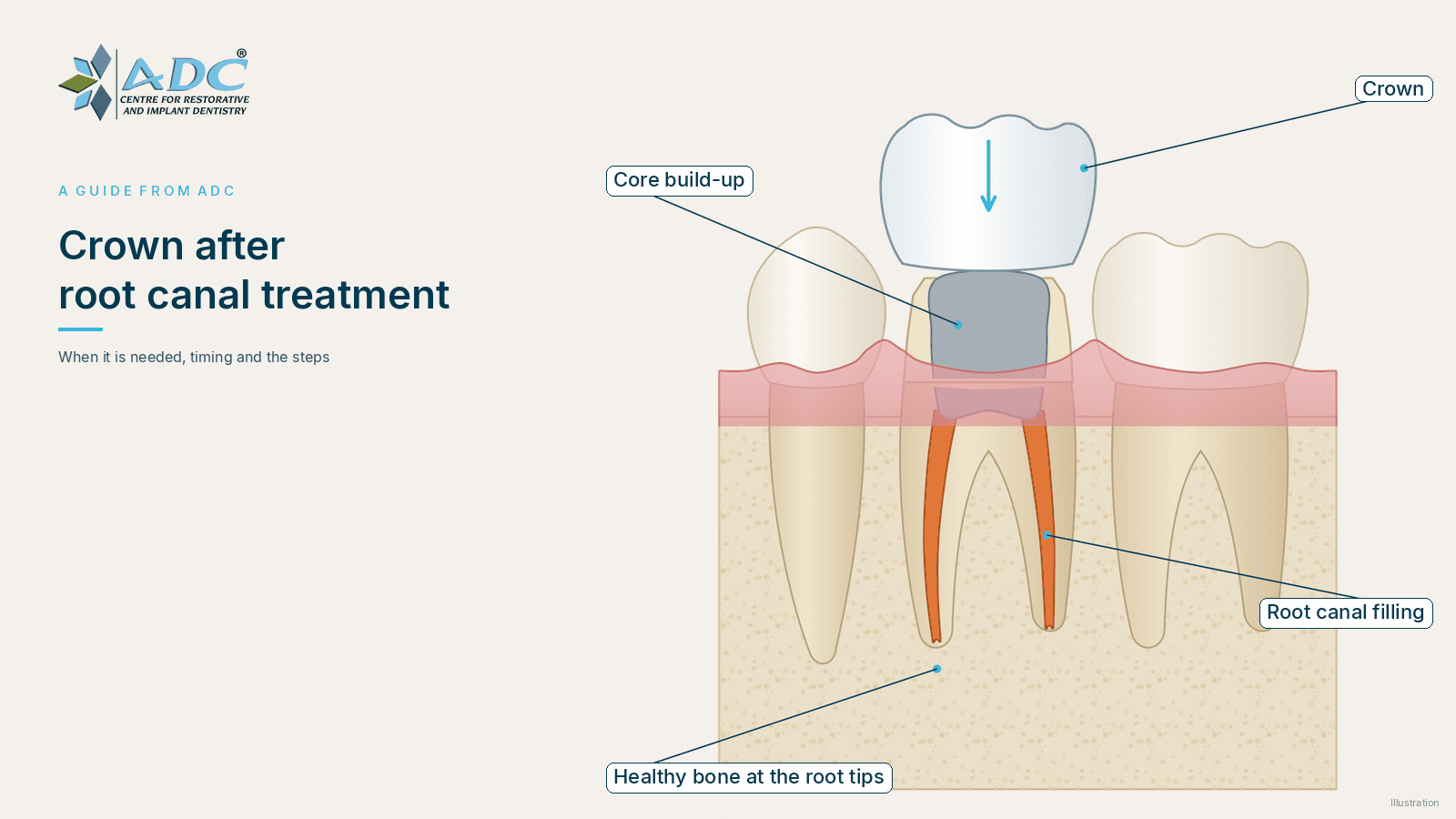 Do you need a crown after root canal treatment?