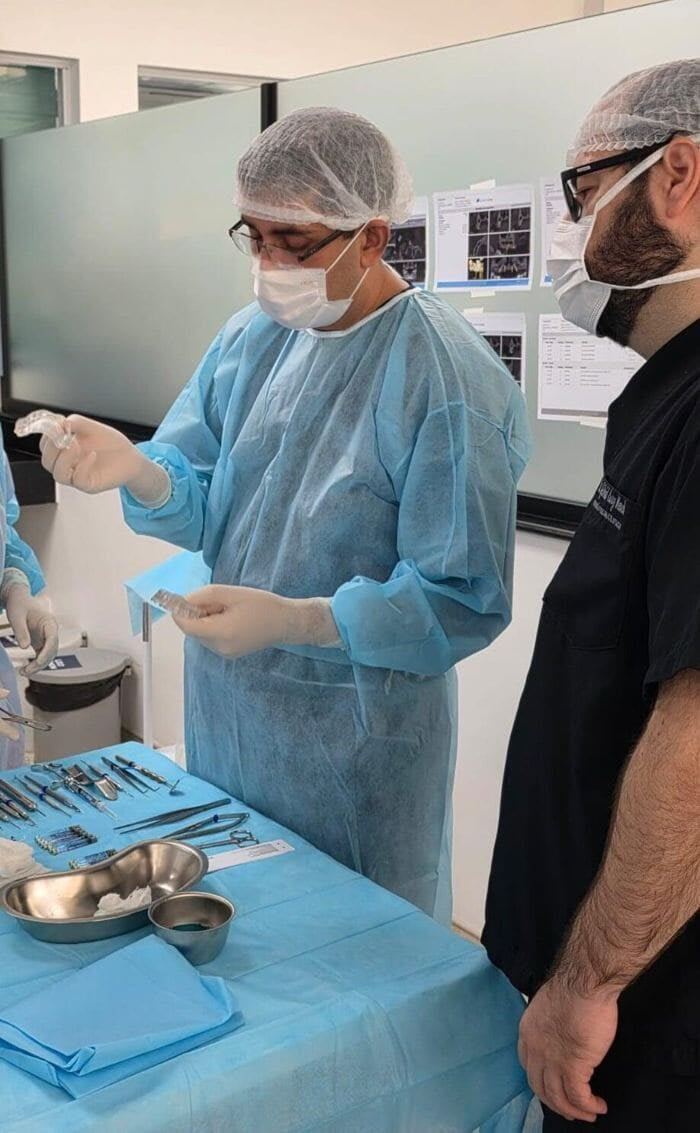
When a dental implant is restored, the crown (the visible tooth) has to be fixed to the implant in the bone. There are two main ways to do this: the crown is either cemented onto a connecting part called an abutment, or it is screwed to the implant through a small channel that is then sealed. This guide compares cement-retained vs screw-retained implant crowns, explains why the choice matters for cleaning, repairs and gum health, and lists the questions to ask your dentist.
For the full implant journey, see our complete guide to dental implants in Chandigarh.
Implant crown types: the parts
A single implant tooth usually has three parts:
- Implant: a small titanium (or sometimes ceramic) post placed in the jawbone, which acts as the root.
- Abutment: a connector that sits on the implant and comes up through the gum.
- Crown: the tooth-shaped cap you see and chew with.
What differs between the two methods is how the crown is held to the abutment and implant.
I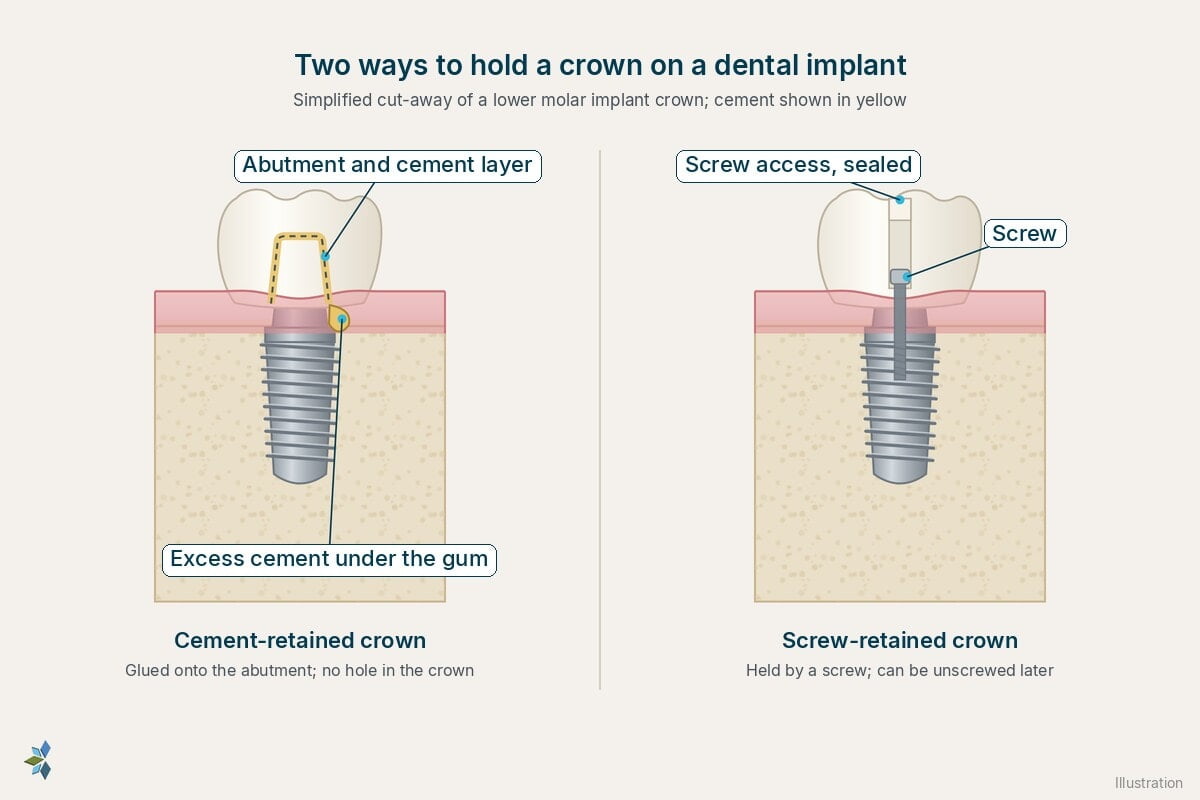 llustration: a cemented crown is fixed over an abutment with dental cement; a screw-retained crown is held by a screw through a small access hole that is then sealed. Not to scale. Not a patient photograph.
Cement-retained implant crowns
The abutment is screwed into the implant, and the crown is then cemented over it, much like a crown on a natural tooth.
Possible advantages
- No access hole in the biting surface, which can help appearance and the shape of the bite surface.
- Can be useful when the implant is angled in a way that would bring a screw hole out through the front of the tooth.
- A familiar technique for many dentists and technicians.
Possible drawbacks
- Excess cement. Cement can squeeze out beyond the crown edge and stay under the gum, where it is hard to see and remove. A systematic review found that leftover cement is a possible risk indicator for inflammation around implants (peri-implant disease).
- Harder to remove. If the crown or screw underneath ever needs attention, a cemented crown may have to be cut off and replaced.
- Crown edges deep under the gum make cement clean-up more difficult.
Screw-retained implant crowns
The crown is joined to its abutment, often in the laboratory, and the whole unit is screwed to the implant. The small access hole on top is filled with a soft material and a tooth-coloured filling.
Possible advantages
- No cement under the gum, so the risk linked with excess cement is avoided.
- Retrievable. The crown can be unscrewed for cleaning, repair or checking the implant, and put back.
- In a systematic review of fixed implant restorations, screw-retained restorations had fewer technical and biological complications overall.
Possible drawbacks
- A small filled hole on the biting surface (on back teeth it is rarely noticed).
- The implant must be positioned so that the screw channel comes out in a suitable place, though angled screw channels can help in some cases.
- A screw can occasionally loosen and need retightening.
Cement-retained vs screw-retained implant crowns: which lasts longer?
In the same review, the five-year survival of cemented and screw-retained restorations was similar, with no significant difference. The difference lies more in complications and maintenance than in survival. Your dentist will weigh both, along with the position of the implant, the space available, appearance and how easy the tooth will be to clean.
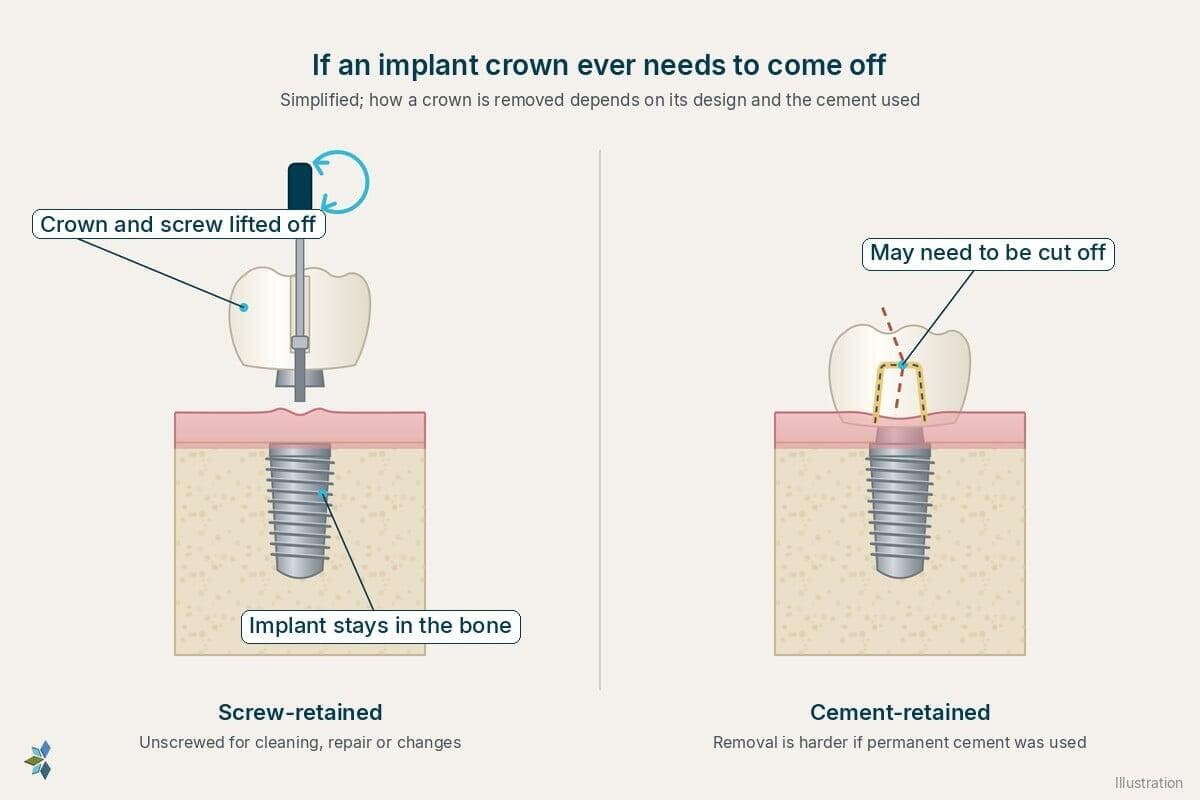 Illustration: a screw-retained crown can be unscrewed and refitted; a cemented crown may need to be cut off if the parts underneath need attention. Not a patient photograph.
How dentists reduce cement problems
When a cemented crown is the better choice, these steps help:
- placing the crown edge at or close to the gum line, so cement can be seen and cleaned away
- using a small, controlled amount of cement
- checking the area after cementing, sometimes with an X-ray
- early follow-up visits once the crown is fitted
Caring for an implant crown
Whichever method is used, plaque control matters most. Brush twice a day, clean between the teeth with floss, interdental brushes or a water flosser as advised, and keep your review appointments. Tell your dentist if the crown feels loose, the gum bleeds or swells, or there is a bad taste. Read our home-care tips for dental implants and, if you are worried about a problem, see loose implant treatment and failed dental implant: how to care, replace and prevent failure.
Questions to ask your dentist
- Will my implant crown be cemented or screw-retained, and why?
- If it is cemented, where will the crown edge sit in relation to the gum?
- Can the crown be removed later if needed?
- Which material will the crown be made of?
- How often should I come for check-ups and cleaning?
Implant crowns at ADC, Chandigarh
At ADC – Centre for Restorative and Implant Dentistry, implant crowns and bridges are planned by Dr. Mohit Dhawan, MDS (Prosthodontics, Crown & Bridge and Implantology). The method of retention is chosen for each implant after examining the bite, the implant position and the space available. ADC prefers screw-retained implant crowns where the implant position allows, and uses Straumann Variobase abutments for them. Learn more on our dental implants in Chandigarh page, read why Straumann® dental implants? or see the factors that affect the cost of dental implants.
For dentists: retention choice, screw loosening and other hardware problems are covered in our hardware complications in dental implants e-learning course.
Frequently asked questions
Is a screw-retained implant crown better than a cemented one?
Neither is best for every case. Screw-retained crowns are easier to remove and avoid excess cement, while cemented crowns can suit some angled implants. Survival over five years is similar.
Can excess cement cause implant problems?
It can. Cement left under the gum is a possible risk indicator for inflammation around implants, which is why dentists take care to remove it.
Will I see the screw hole?
The hole is sealed with a tooth-coloured filling. On back teeth it is usually not noticeable.
My implant crown feels loose. What should I do?
Contact your dentist soon. A loose screw is often simple to fix, but it should be checked before the parts are damaged.
Can a cemented implant crown be changed to a screw-retained one?
Sometimes, when the crown is replaced, depending on the implant position and the parts available.
Book an implant consultation in Chandigarh
To discuss an implant crown or a problem with an existing implant, book a consultation at ADC – Centre for Restorative and Implant Dentistry:
- Online booking: ADC Zoho Bookings
- Phone: +91-708-780-0016
- Email: help@theadc.dental
- Clinic: ADC- Centre for Restorative and Implant Dentistry, 1197, Sector 21B, Chandigarh 160022
Mon–Fri 10:00 AM–6:30 PM; Sat 10:00 AM–5:00 PM; Sunday closed.
Reviewed by Dr. Mohit Dhawan, MDS (Prosthodontics, Crown & Bridge and Implantology).
References
- Wittneben JG, Millen C, Brägger U. Clinical performance of screw- versus cement-retained fixed implant-supported reconstructions — a systematic review. Int J Oral Maxillofac Implants. 2014 — PubMed 24660192
- Staubli N, Walter C, Schmidt JC, Weiger R, Zitzmann NU. Excess cement and the risk of peri-implant disease — a systematic review. Clin Oral Implants Res. 2017 — PubMed 27647536
- American Dental Association, MouthHealthy. Dental implants — mouthhealthy.org




 International Team for Implantology
 ISO 9001:2015 Certified
 OHSAS Certified
 Academy of Osseo-Integration
 Indian Prosthodontics Society
 Indian Endodontic Society
 Women Implantology Network
 Indian Dental Association







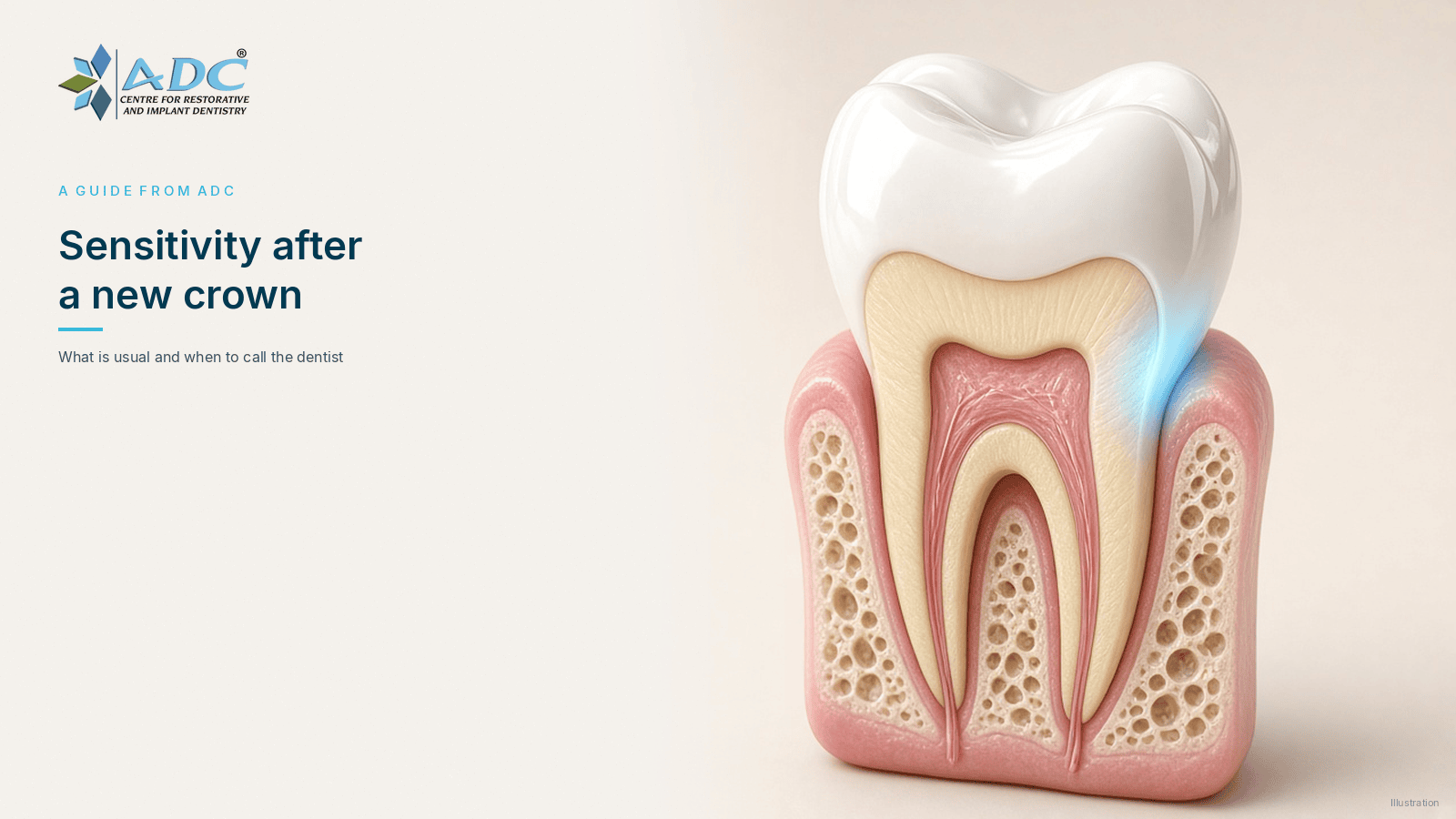 Sensitivity after a new crown: what is usual and when to call the dentist
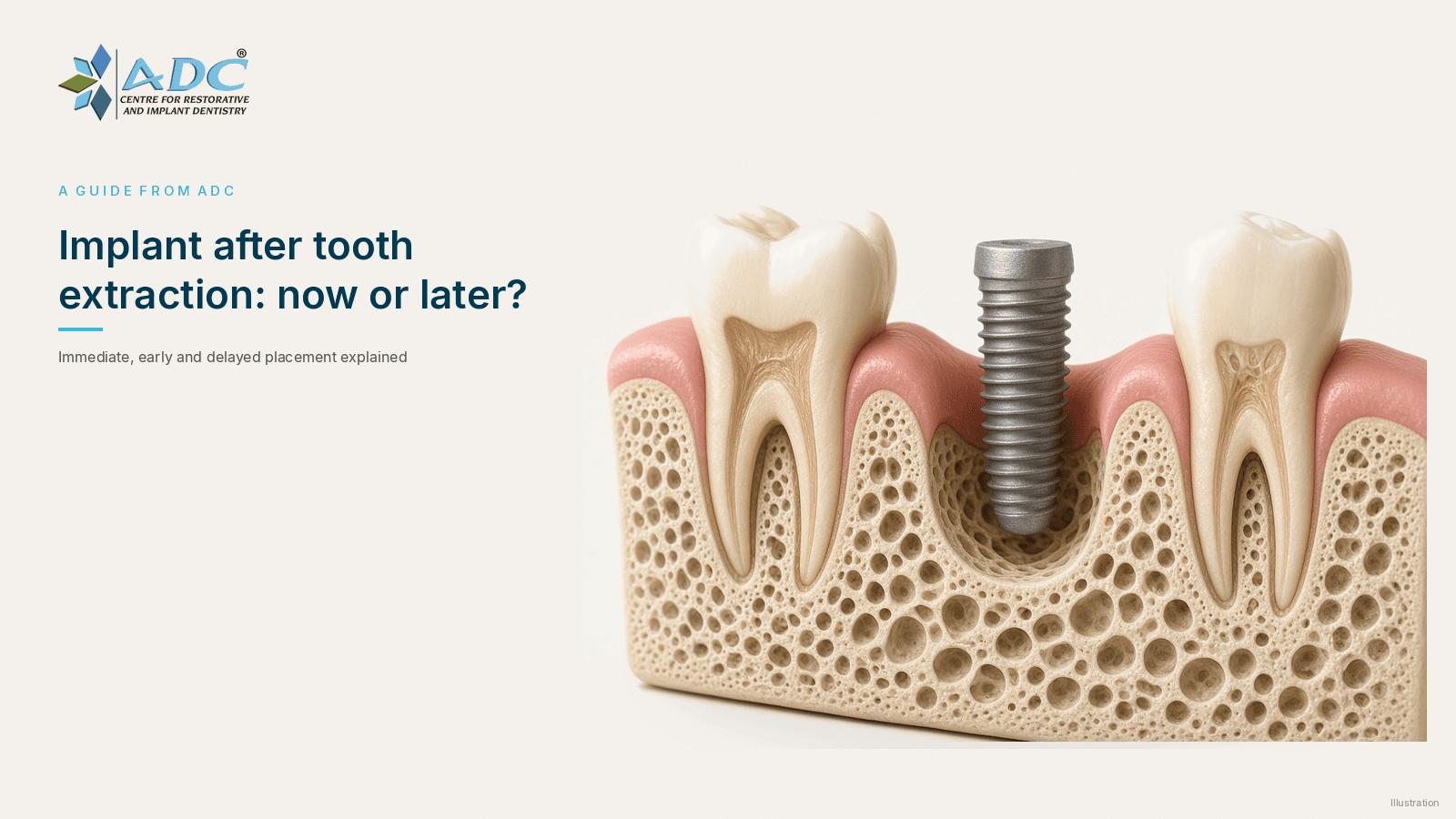 Dental implant after tooth extraction: immediate or delayed placement?
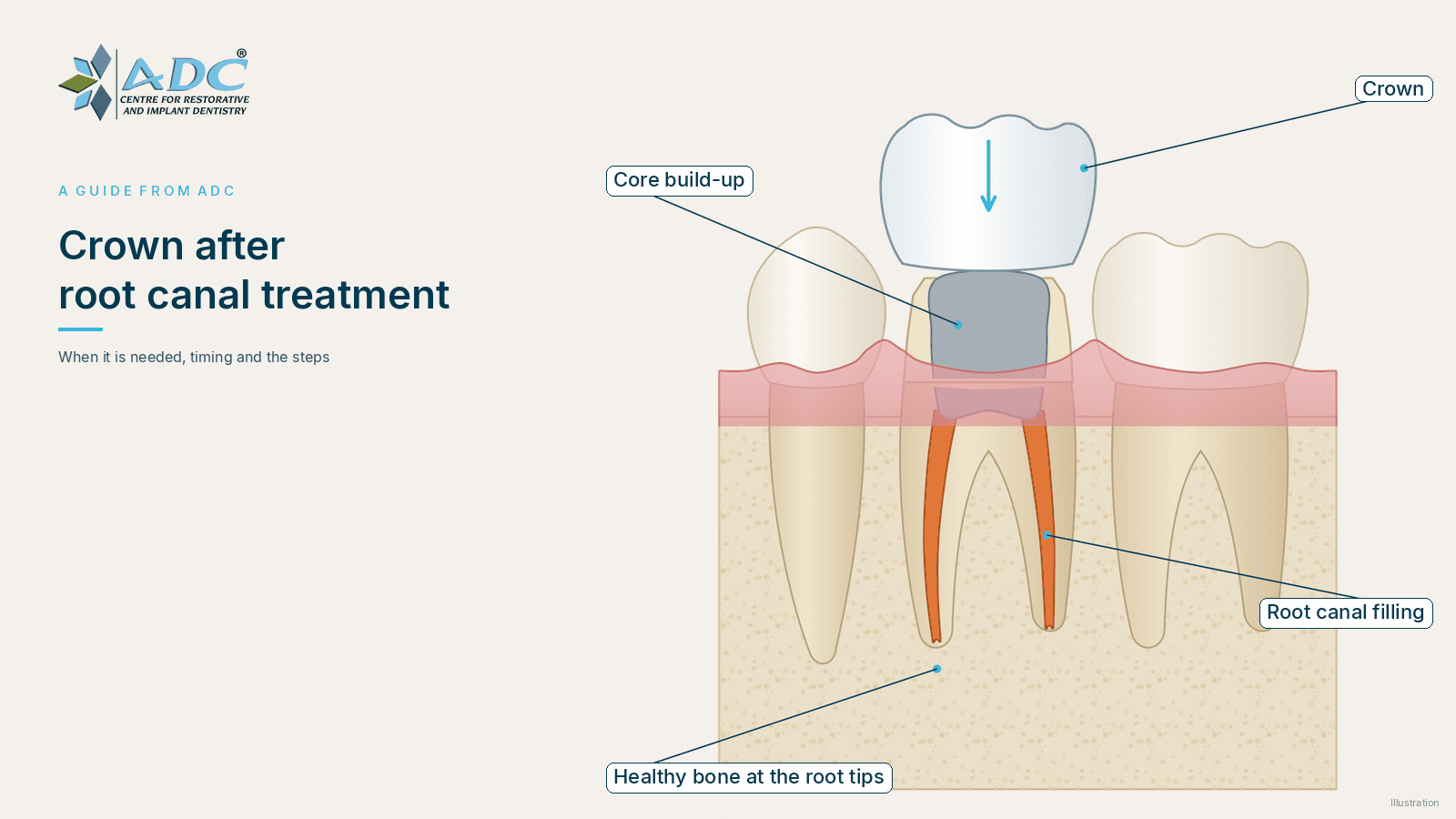 Do you need a crown after root canal treatment?