When a tooth has to be removed, one of the first questions people ask is when the gap can be filled. If a dental implant is the plan, the timing of an implant after tooth extraction is a real clinical decision. Some implants are placed on the same day the tooth is removed. Others are placed a few weeks or a few months later, once the socket has healed. This article explains, in general terms, the main timing options, what dentists assess before choosing one and what you can expect in the weeks after an extraction.
What happens to the socket after a tooth is removed
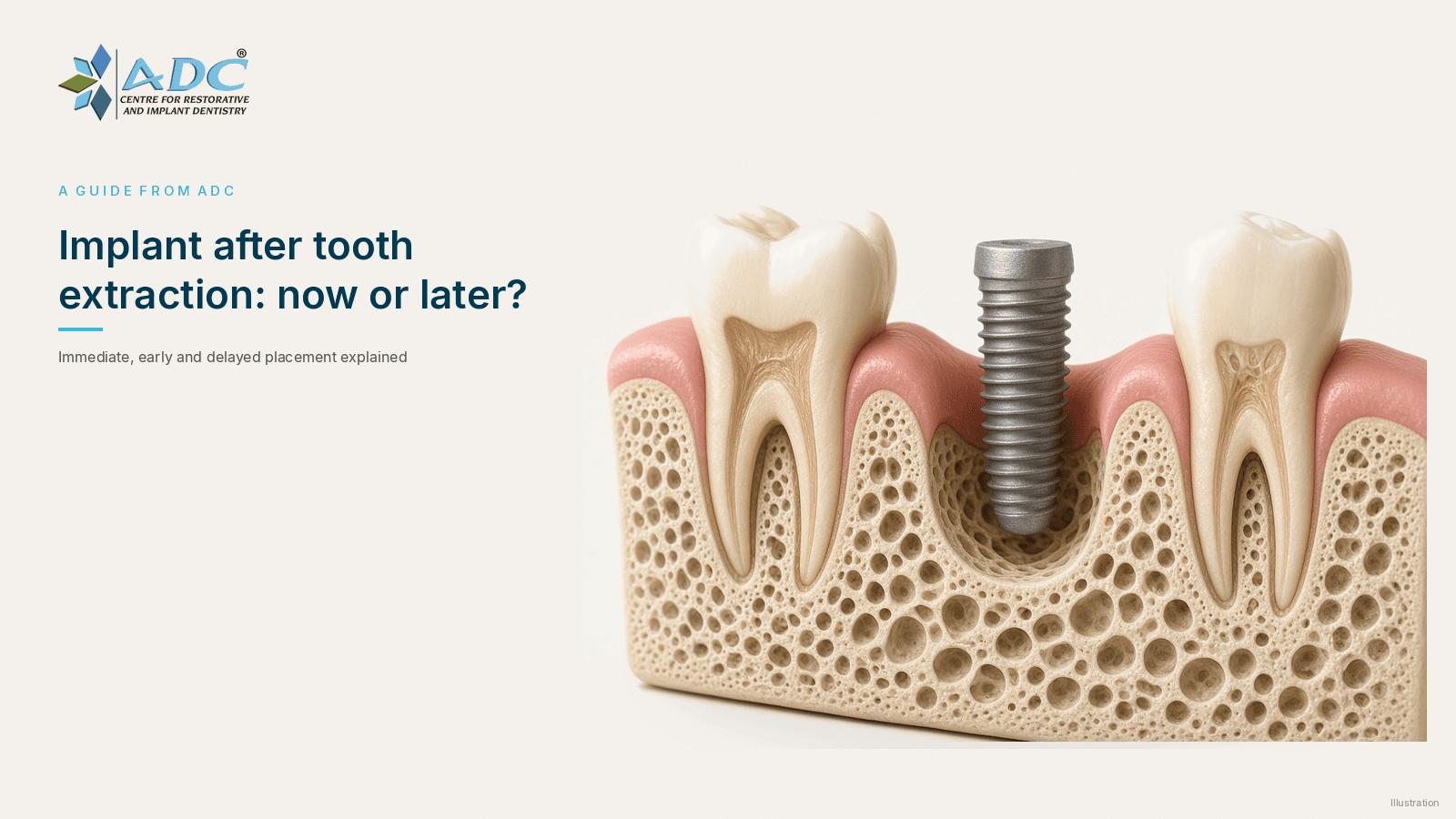
A tooth sits in a socket of bone, supported by the gum around it. Once the tooth is removed, the socket fills with a blood clot, and over the following weeks and months the clot is gradually replaced by new bone while the gum closes over the top.
During this healing, the bone ridge also changes shape. Research on healing sockets has shown that the ridge usually becomes narrower and, to a lesser extent, lower, with much of this change happening in the first few months. The thin outer wall of bone on the cheek side is often the part that reduces most. How much the ridge changes varies from person to person and from tooth to tooth.
This matters for implants because an implant needs enough healthy bone around it, and, in visible areas, enough bone and gum to support a natural-looking result.
The main timing options
Implant dentists often describe four broad timings for placing an implant after an extraction.
Immediate placement (on the day of extraction)
The tooth is removed carefully and the implant is placed into the socket during the same appointment. A gap between the implant and the socket walls, especially on the cheek side, may be filled with a bone graft material. Immediate placement combines the extraction and the implant surgery in one appointment, although the final tooth is still made later. It is usually considered only when the socket walls are intact after a gentle extraction, any infection can be cleaned out thoroughly, and there is enough bone at the root tip or along the socket walls to hold the implant firmly. If the outer wall is damaged or missing, the implant is often delayed and the area rebuilt.
Early placement with soft-tissue healing (about 4 to 8 weeks)
The extraction site is left to heal for several weeks so that the gum closes over the socket. The implant is then placed into a site where the gum has closed. Some reduction of the outer bone wall may already have taken place by this stage. This approach is often used when the gum needs time to heal or when a local infection needs to settle first.
Early placement with partial bone healing (about 12 to 16 weeks)
Waiting a little longer allows new bone to fill part of the socket. This can help when the root tip area did not have enough bone to hold an implant straight away.
Delayed placement (after about 6 months or more)
The socket is allowed to fill in with bone before the implant is placed, although the ridge may by then be narrower than it was on the day of extraction. Delayed placement may be chosen when there was a large infection, when the patient has health factors that affect healing, or when a bone graft is needed first. Some people also come for an implant years after losing a tooth. In those cases the ridge may have changed considerably, and additional bone grafting is more often needed.
Immediate placement and immediate teeth are not the same thing
Two separate decisions are involved.
- When the implant is placed: on the day of extraction, after some weeks, or after some months.
- When the implant is loaded: in other words, when a tooth is attached to it.
An implant placed immediately does not always receive a tooth on the same day. In many cases the implant is left to bond with the bone, a process called osseointegration, before the final tooth is made. In the meantime, a temporary option, such as a removable tooth or a bonded temporary bridge, may be used to fill the gap. A fixed temporary tooth is attached early only when the implant is held firmly and the bite will not overload it, and the dentist decides this for that site.
What the dentist assesses before deciding
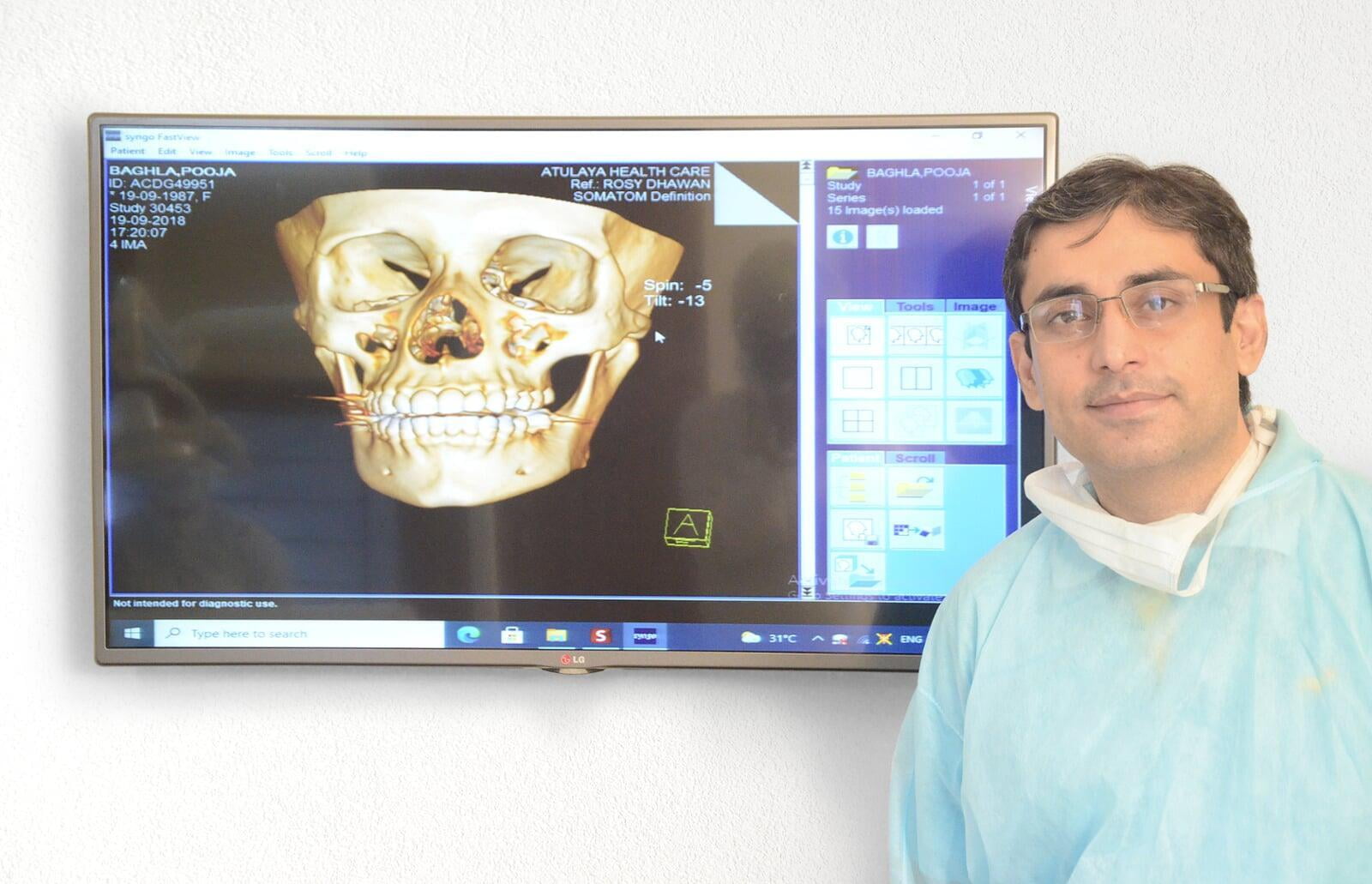
The timing is chosen for each tooth after an examination and often a 3D X-ray of the jaw called a CBCT scan. The points commonly considered include:
- The reason the tooth is being removed: for example a crack, decay that cannot be repaired, gum disease or a failed root canal treatment.
- Infection: whether there is an abscess or long-standing infection around the root, and whether it can be controlled.
- The socket walls: especially the thin outer wall, and whether it is intact after extraction.
- Bone volume: whether there is enough bone beyond the root tip and around the socket to hold an implant firmly.
- The position of the tooth: front teeth, where the gum line is visible, are often planned differently from molars, which have wider sockets with more than one root.
- The gum: its thickness and health, and the position of the gum line around neighbouring teeth.
- General health and habits: for example smoking, diabetes control and certain medicines that can affect healing.
- The bite: including tooth grinding, which can place heavy forces on a new implant.
No single factor decides the plan on its own.
Preserving the site when the implant comes later
When an implant is planned for a later date, the dentist may suggest a procedure at the time of extraction to help limit the shrinkage of the ridge. This is often called socket preservation or ridge preservation, and it usually involves placing a bone graft material in the socket and covering it. It does not stop all change, but studies suggest it can reduce the amount of ridge lost compared with leaving the socket to heal on its own. Whether it is needed depends on the site and on the overall plan.
What to expect in the weeks after an extraction
Whichever timing is chosen, the first days after an extraction are about protecting the blood clot and keeping the area clean. Written aftercare advice usually includes avoiding smoking, avoiding vigorous rinsing on the first day and following the advice on food and medicines.
If the implant is placed later, a review visit checks healing before the implant appointment is planned.
Contact your dentist if you notice pain that increases after the first few days, swelling that is getting worse, a fever, a bad taste or discharge from the socket, or bleeding that does not stop with gentle pressure.
Frequently asked questions
How long after tooth extraction can I get an implant?
It varies. An implant can sometimes be placed on the same day as the extraction. In other cases dentists wait about 4 to 8 weeks for the gum to heal, about 12 to 16 weeks for some bone to form, or about 6 months or more for full healing. The right timing depends on infection, bone and gum at that site and on your general health.
Can an implant be placed immediately after extraction?
Sometimes. Immediate placement is considered when the socket walls are intact, any infection can be controlled and there is enough bone to hold the implant firmly. If these conditions are not met, a short wait is usually advised.
Is there a disadvantage to waiting too long after an extraction?
The ridge of bone usually narrows over time after a tooth is removed, and neighbouring teeth can slowly drift into the gap. If an implant is placed many months or years later, a bone graft is more often needed. It is worth discussing the timing with your dentist before or soon after the extraction.
Will I have a gap while the implant heals?
Not necessarily. Temporary options include a removable tooth, a bonded temporary bridge and, in selected cases, a temporary tooth fixed to the implant. Your dentist will advise which suits the site.
Do I need a bone graft for an implant after extraction?
Not always. A graft may be advised to fill the space around an immediate implant, to preserve the socket for a later implant, or to rebuild bone that has been lost. Your dentist will explain whether this applies to you after examining the site and the scan.
Booking a consultation
This article is general information, not advice for any individual. Please speak with your dentist about your own situation.
If you have been told a tooth needs to be removed, or you already have a gap and would like to understand the options and timing for a dental implant, you are welcome to request a consultation with Dr. Mohit Dhawan or Dr. Rosy Dhawan at ADC – Centre for Restorative and Implant Dentistry, #1197 Sector 21-B, Chandigarh 160022, through the appointment page. Saturday hours are 10:00 AM to 5:00 PM.



 International Team for Implantology
 ISO 9001:2015 Certified
 OHSAS Certified
 Academy of Osseo-Integration
 Indian Prosthodontics Society
 Indian Endodontic Society
 Women Implantology Network
 Indian Dental Association






 Sensitivity after a new crown: what is usual and when to call the dentist
 Dental implant after tooth extraction: immediate or delayed placement?
 Do you need a crown after root canal treatment?