Many people notice that a tooth feels a little sensitive after a new crown is fitted. Cold drinks, a breath of cold air or biting on the tooth may cause a short, sharp feeling. In many cases this settles on its own over the following days or weeks. Sometimes, though, sensitivity after a crown is a sign that something needs checking. This article explains, in general terms, why a crowned tooth can feel sensitive, what is commonly expected, and when it is sensible to contact your dentist.
Why a tooth can feel sensitive after a crown
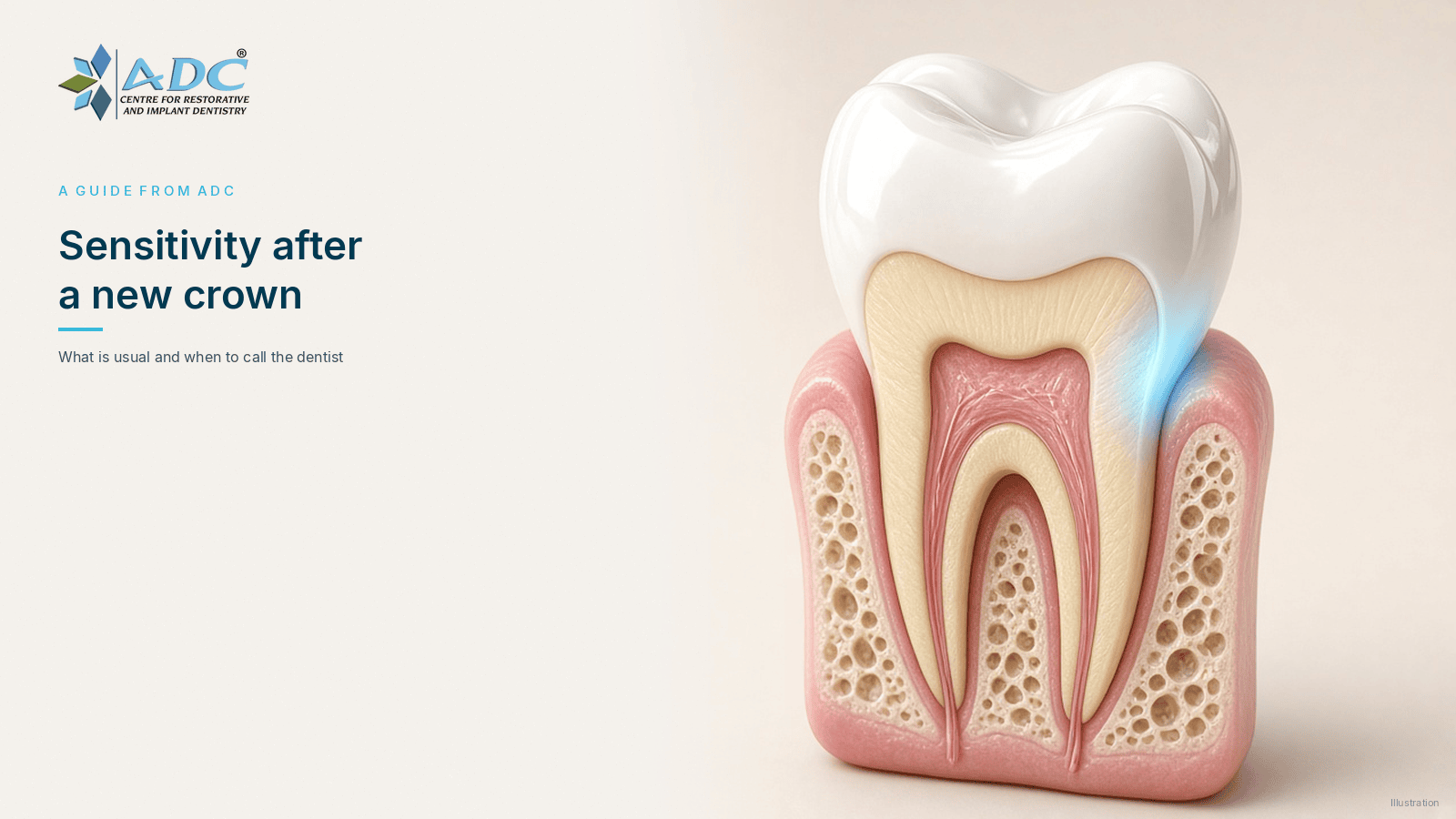
A crown is a cap that covers the visible part of a tooth. To make room for it, the dentist shapes the tooth by removing a thin layer from its outer surface. Underneath the enamel is dentine, a layer that contains tiny fluid-filled channels leading towards the nerve of the tooth, called the pulp. When dentine is exposed or disturbed, changes in temperature or pressure can move the fluid in these channels and the nerve may react.
Several steps in the crown process can make the tooth more responsive for a while:
- Shaping the tooth: the preparation exposes fresh dentine and creates some warmth, which can irritate the pulp for a short time.
- The temporary crown: a temporary crown protects the tooth between visits, but it may not seal as closely as the final crown, so cold or sweet foods can reach the tooth.
- Cementing the final crown: the cement and the cleaning steps before it can cause brief sensitivity in the first days.
- The gum line: if the gum around the tooth was a little sore or pushed back during the appointment, the root surface near the edge of the crown may be sensitive until the gum settles.
What is commonly expected
Mild sensitivity to cold, and sometimes to heat or sweet foods, is common in the first days after a crown is fitted. It usually lasts only a moment after the trigger is removed. For many people it eases gradually over a few days to a few weeks as the pulp settles. How long it lasts varies from person to person and from tooth to tooth. Teeth that had deep decay or a large filling before the crown may take longer to settle.
The gum around a new crown may also feel tender for a few days, especially if it was irritated during the preparation or the fitting.
When sensitivity may need checking
Some kinds of discomfort are less likely to settle on their own and are worth a review. These include:
- Pain when biting: if the tooth hurts when you bite down, or the bite feels high or uneven, the crown may be touching the opposite tooth too early. This can often be adjusted at a short visit.
- Lingering pain: pain that lasts for many seconds or minutes after a hot or cold drink, rather than fading at once.
- Throbbing or pain on its own: pain that starts without any trigger, keeps you awake or needs painkillers to manage.
- Sensitivity that is getting worse: rather than slowly easing over the weeks.
- Swelling or a bad taste: swelling of the gum or face, a pimple-like bump on the gum, or a bad taste around the tooth.
- A loose or chipped crown: a crown that moves, feels rough at the edge or has a gap where food collects.
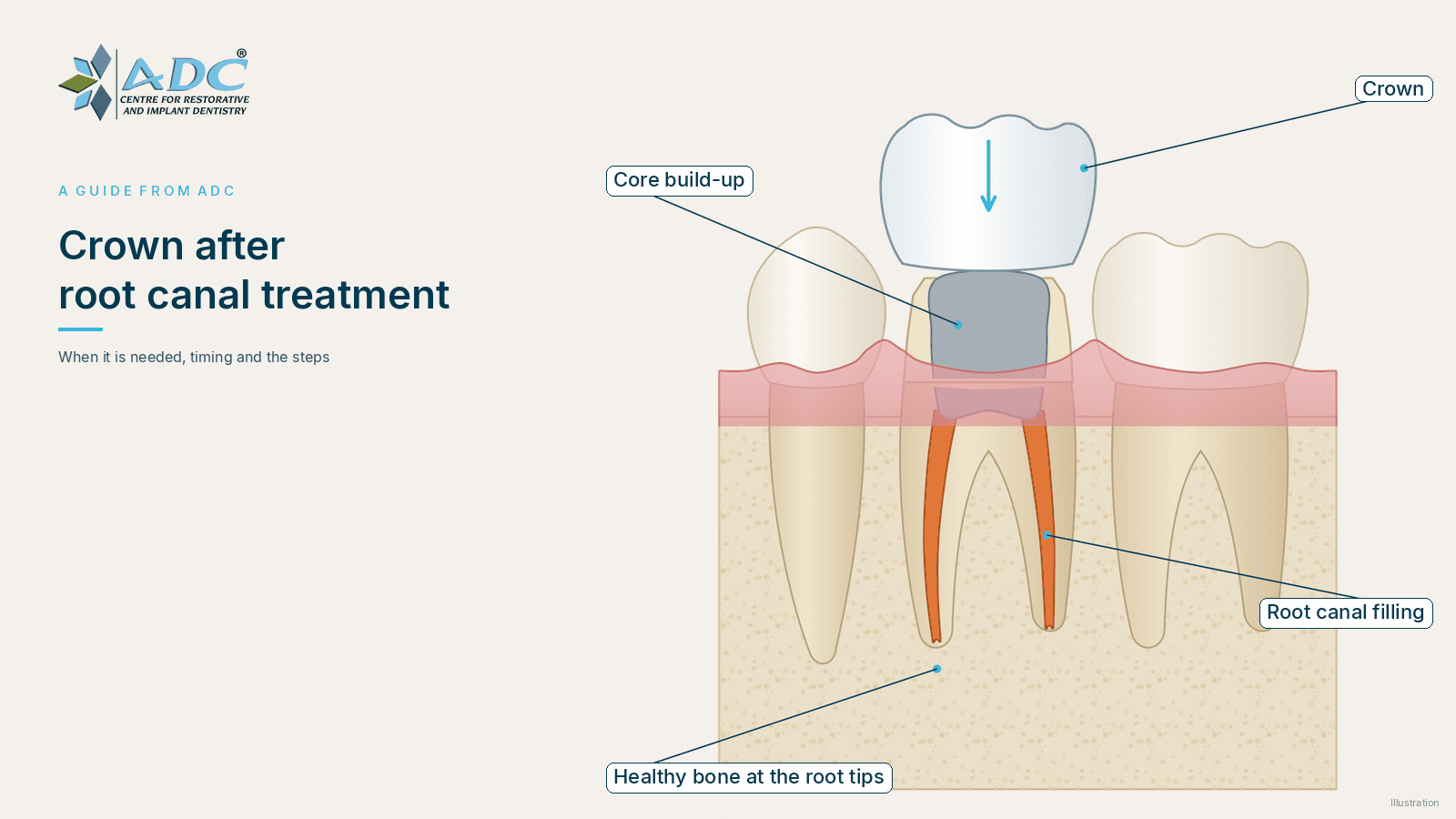
These signs can have several causes. The bite may need adjusting, the cement seal may need checking, or the pulp may be inflamed. In some teeth, especially those that had deep decay or several fillings over the years, the pulp may not recover, and root canal treatment through the crown may be advised. A tooth that already had root canal treatment before its crown has no living pulp, so it does not usually react to cold, but the surrounding gum and bone can still feel tender when biting.
What the dentist may check
If you return with sensitivity after a crown, the dentist will usually ask when it started, what triggers it and how long it lasts. Common checks include:
- testing the bite with thin marking paper and adjusting high spots on the crown,
- looking at the edge of the crown and the gum line,
- tests on the tooth to see how the pulp responds,
- an X-ray to look at the crown, the root and the bone around it.
The next step depends on what is found. It may be a small adjustment, a desensitising treatment, time to let the tooth settle, or further treatment of the pulp.
Looking after a tooth with a new crown
A few general steps may help while a newly crowned tooth settles:
- Use a toothpaste for sensitive teeth: regular use, as advised by your dentist, can help reduce sensitivity of exposed dentine.
- Avoid very hot or very cold food and drinks: for the first few days, if they set off the sensitivity.
- Brush gently with a soft brush: and clean between your teeth around the crown every day, so that the gum stays healthy.
- Chew carefully: avoid biting very hard foods on the new crown in the first days, and with a temporary crown avoid sticky foods.
- Mention grinding or clenching: if you grind your teeth at night, tell your dentist, because heavy forces can make a crowned tooth sore. A night guard may be suggested.
Frequently asked questions
How long does sensitivity last after a new crown?
It varies. Mild sensitivity to cold often eases over a few days to a few weeks. If it is getting worse, lingers after a cold drink or is still bothering you after several weeks, ask your dentist to check the tooth.
Is it normal for a crown to hurt when I bite?
A little tenderness in the first days can happen. Pain every time you bite, or a bite that feels high, usually means the crown needs checking and possibly adjusting.
Why is my crowned tooth sensitive to cold?
The tooth under the crown still has a living nerve unless it has had root canal treatment. Shaping the tooth and fitting the crown can make the nerve more responsive for a while. Sensitivity can also come from the root surface near the gum line.
Does sensitivity after a crown mean I need a root canal?
Not necessarily. Most mild sensitivity settles. Root canal treatment is considered when the tests and symptoms suggest the pulp is inflamed and will not recover, for example with lingering or throbbing pain.
Can a sensitive toothpaste help after a crown?
It may help with sensitivity from exposed dentine near the gum line. It will not fix a high bite or an inflamed pulp, so persistent pain still needs a check.
Booking a review
This article is general information, not advice for any individual. Please speak with your dentist about your own situation.
If a tooth with a new crown is sensitive, sore when you bite or not settling as expected, you are welcome to request a review with Dr. Mohit Dhawan or Dr. Rosy Dhawan at ADC – Centre for Restorative and Implant Dentistry, 1197, Sector 21B, Sector 21, Chandigarh 160022, through the appointment page. Saturday hours are 10:00 AM to 5:00 PM.




 International Team for Implantology
 ISO 9001:2015 Certified
 OHSAS Certified
 Academy of Osseo-Integration
 Indian Prosthodontics Society
 Indian Endodontic Society
 Women Implantology Network
 Indian Dental Association






 Sensitivity after a new crown: what is usual and when to call the dentist
 Dental implant after tooth extraction: immediate or delayed placement?
 Do you need a crown after root canal treatment?