★★★★★ 4.8 Average Rating on Google
Full Mouth Rehabilitation
Full Mouth Rehabilitation in Chandigarh
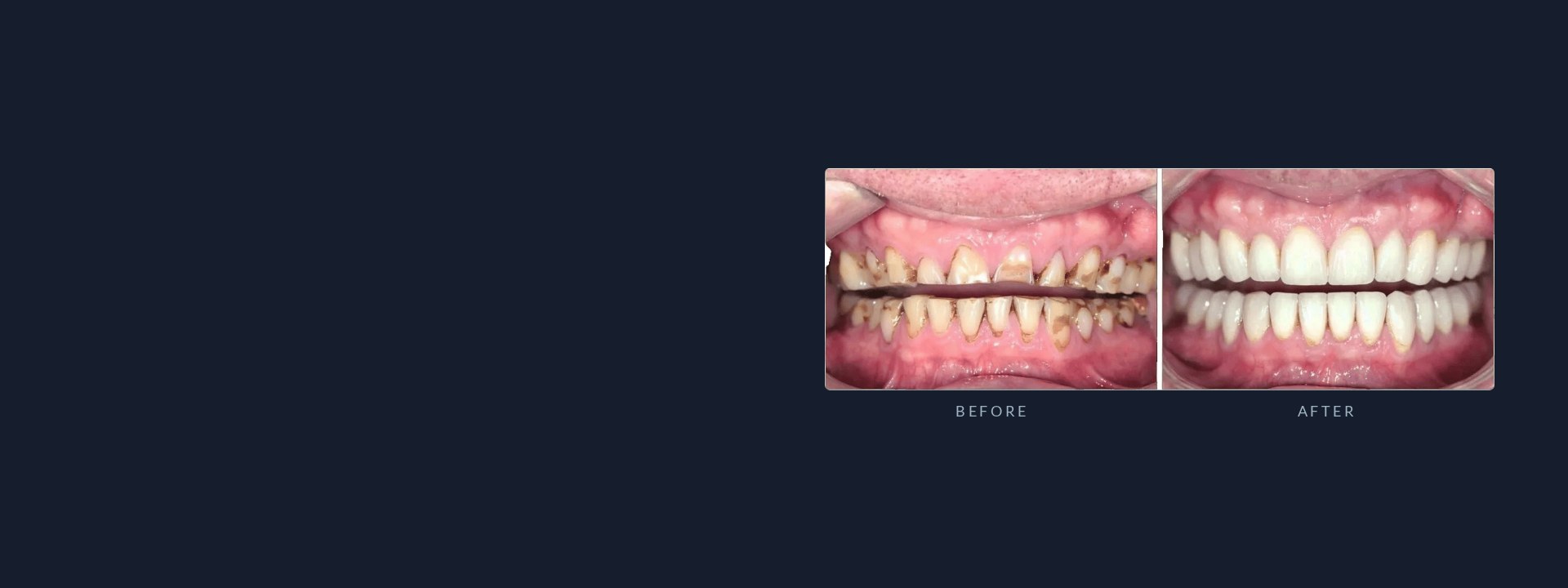
When many teeth are worn, broken, missing or repaired again and again, ADC brings everything together in one carefully sequenced plan, so that your bite, chewing comfort, gums and smile are considered as a whole.
Schedule appointmentWhatsApp ADCCall +91-7087800016When many teeth are worn, broken, missing or repaired again and again, fixing one tooth at a time often stops working. Full mouth rehabilitation in Chandigarh at ADC brings everything together in one carefully sequenced plan, so that your bite, chewing comfort, gums and smile are considered as a whole. Prosthetic treatment planning and the restorative phase, including crowns and bridges, are handled by Dr. Mohit Dhawan, prosthodontist, MDS (Prosthodontics, Crown & Bridge and Implantology), at our clinic in Sector 21, Chandigarh. Other stages, such as gum treatment or root canal treatment, are coordinated within the same plan by the ADC clinical team, as each case needs.
This page explains who may need full mouth reconstruction, what the process involves step by step, the options available and what recovery looks like. Every mouth is different, so the right plan for you can only be decided after an examination.
Book a full mouth rehabilitation consultation
What is full mouth rehabilitation?
Full mouth rehabilitation (sometimes called full mouth reconstruction or full mouth restoration) is not a single procedure. It is a coordinated treatment plan that may combine gum care, root canal treatment, crowns, bridges, dental implants or dentures, carried out in a planned order. The aim is a mouth that is healthy, comfortable to chew with and pleasing to look at, with the teeth meeting in a stable bite. It falls under restorative dentistry and prosthodontics.
Who needs full mouth rehabilitation?
A full mouth plan may be suggested if you have several of the following:
- Many teeth that are broken, cracked or heavily filled
- Several missing teeth, or old bridges and dentures that no longer fit well
- Teeth worn down by grinding, acid erosion or age (read our guide on when worn teeth may need full mouth rehabilitation)
- Gum disease that has affected the support of several teeth
- A bite that feels uneven, or discomfort in the jaw muscles
- Earlier dental work that keeps failing and needs to be redone as a whole
If you are unsure whether a full plan is right for you, our article Full mouth rehabilitation: is it the right choice for you? covers the decision in more detail.
Signs you may benefit from a full mouth assessment
Changes you can feel
- Difficulty chewing, or avoiding certain foods
- Sensitivity in several teeth
- Teeth that feel shorter, chipped or rough
- Jaw tiredness or headaches on waking (see teeth grinding (bruxism) treatment)
Changes you can see
- Gaps from missing teeth, or teeth drifting into gaps
- Flat, short or uneven front teeth
- Old crowns or fillings that are dark, loose or leaking
- Receding or bleeding gums (see gum disease treatment)
These signs do not always mean you need full mouth treatment. They are a good reason to have a thorough check-up.
The full mouth rehabilitation process, step by step
Step 1: Consultation and records
We listen to your concerns and goals, review your medical history and examine your teeth, gums, jaw joints and bite. Records may include X-rays, photographs and digital scans or models. Start with a consultation visit.
Step 2: Assessment and a written treatment plan
The dentist explains what is causing the problems and the options available, including simpler alternatives where suitable. You receive a phased plan with an estimate, so you can decide with full information.
Step 3: Foundation treatment
Before teeth are rebuilt, any active problems are treated first. This may include deep cleaning or gum treatment, root canal treatment, removing teeth that cannot be saved and, if needed, placing implants or bone grafts.
Step 4: Testing the new bite and smile
Where the bite or tooth shape is being changed, temporary teeth or a trial ("mock-up") may be used first. This lets you and the dentist check comfort, speech and appearance before the final restorations are made.
Step 5: Final restorations
The final crowns, bridges, implant teeth or dentures are made and fitted, often in stages, with careful bite adjustment at each visit.
Step 6: Review and maintenance
After treatment, the bite and gums are reviewed at follow-up visits. Please follow up after 6 months. A night guard may be advised to protect the new teeth if you grind. Regular dental check-ups and professional maintenance help restorations last.
Materials and treatment options
The materials and options are chosen to suit your bite, your habits and your preferences. Your plan may include:
- Crowns: zirconia, lithium disilicate (IPS e.max) or metal-ceramic (porcelain-fused-to-metal, PFM). The material is chosen case by case, according to the clinical needs, the position of the tooth, the forces of the bite, appearance and the overall treatment plan. See dental crowns and bridges.
- Bridges: to replace one or more missing teeth using neighbouring teeth for support.
- Dental implants: to replace missing teeth without involving neighbouring teeth. See dental implants in Chandigarh.
- Implant-supported dentures or full-arch bridges: for patients missing most or all teeth in a jaw. See implant-supported dentures.
- Onlays, veneers and fillings: more conservative options where enough healthy tooth remains.
For anxious patients, IV sedation may be discussed for longer appointments.
How long does treatment take?
Timelines vary from person to person, so any timeline given before an examination is an estimate, not a fixed duration.
- Rough estimate: many individual stages of treatment may take about 24 hours to 5 days, depending on laboratory work.
- What changes the timeline: the clinical condition, any preparatory procedures, laboratory work and whether additional treatment is needed.
- Plans with gum treatment, extractions or implants usually take longer overall, sometimes several months, because the gums and bone need time to heal before the final teeth are made.
An estimated timeline is given with the written treatment plan. Patients travelling from outside Chandigarh can ask about coordinated scheduling on our international patients page.
Aftercare
- Brush and clean between teeth and under bridges every day, as shown at the clinic.
- Expect some sensitivity or tenderness after certain visits; tell us if it does not settle.
- Wear a night guard if advised, especially if you grind or clench.
- Avoid biting very hard objects such as ice or bones with new restorations.
- Follow up after 6 months.
- Keep regular dental check-ups and professional maintenance visits as recommended.
Read more about crowns after root canal treatment.
Why choose ADC for full mouth rehabilitation?
- Restorative and implant focus: ADC is a Centre for Restorative and Implant Dentistry, led by Dr. Mohit Dhawan and Dr Rosy Dhawan, MDS (Conservative Dentistry and Endodontics).
- Prosthodontic planning: Dr. Mohit Dhawan, MDS (Prosthodontics, Crown & Bridge and Implantology), handles prosthetic treatment planning and the restorative phase.
- Planning under one roof: gum care, root canal treatment, implants and crowns can be coordinated in one plan.
- Digital workflow: intra-oral scanning and CAD-CAM design for crowns and bridges.
- Clear information: a written plan and estimate before treatment begins.
Independent guidance from the American College of Prosthodontists explains what full mouth reconstruction involves.
Frequently asked questions
What is full mouth rehabilitation?
Full mouth rehabilitation (also called full mouth reconstruction) is a planned set of treatments that restores most or all of the teeth in both jaws together, so that chewing, bite, comfort and appearance are addressed as a whole rather than one tooth at a time.
Am I a candidate for full mouth rehabilitation?
You may be a candidate if many teeth are broken, worn, missing or heavily restored, or if your bite feels uncomfortable. Only a clinical examination with X-rays can tell whether full mouth rehabilitation, or a smaller plan, suits you.
How long does full mouth rehabilitation take?
It depends on what each mouth needs. As a rough estimate, many individual stages of treatment may take about 24 hours to 5 days, depending on laboratory work. This is an estimate, not a fixed duration. Plans that include gum treatment, extractions or implants usually take longer overall, because healing time is needed. An estimated timeline is given after assessment.
Is the treatment painful?
Treatment is carried out under local anaesthesia, and sedation may be discussed for anxious patients. Some tenderness or sensitivity after certain steps is common and usually settles; the dentist will explain what to expect at each stage.
How much does full mouth rehabilitation cost?
The cost varies widely with the number of teeth, the treatments and the materials chosen, so we do not quote a fixed price. You will receive a written treatment plan and estimate after your consultation.
How long will my new teeth last?
Longevity depends on your oral hygiene, habits such as grinding, general health and regular check-ups. Crowns, bridges and implants can serve for many years with good care, but every restoration needs maintenance and may eventually need repair or replacement. Regular dental check-ups are advised.
Can full mouth rehabilitation be done with dental implants?
Yes, where teeth are missing implants may be part of the plan, alongside crowns, bridges or implant-supported dentures. Whether implants suit you depends on your bone, gums and general health.
Book your full mouth rehabilitation consultation
The first step is a relaxed consultation and examination. We will explain your options and leave the decision with you.
ADC- Centre for Restorative and Implant Dentistry
1197, Sector 21B, Chandigarh 160022
Phone: +91-708-780-0016
Mon–Fri: 10:00 AM – 6:30 PM · Sat: 10:00 AM – 5:00 PM · Sun: Closed
This page is general information and does not replace a clinical examination. Suitability, timelines and costs depend on an individual assessment.



 International Team for Implantology
 ISO 9001:2015 Certified
 OHSAS Certified
 Academy of Osseo-Integration
 Indian Prosthodontics Society
 Indian Endodontic Society
 Women Implantology Network
 Indian Dental Association





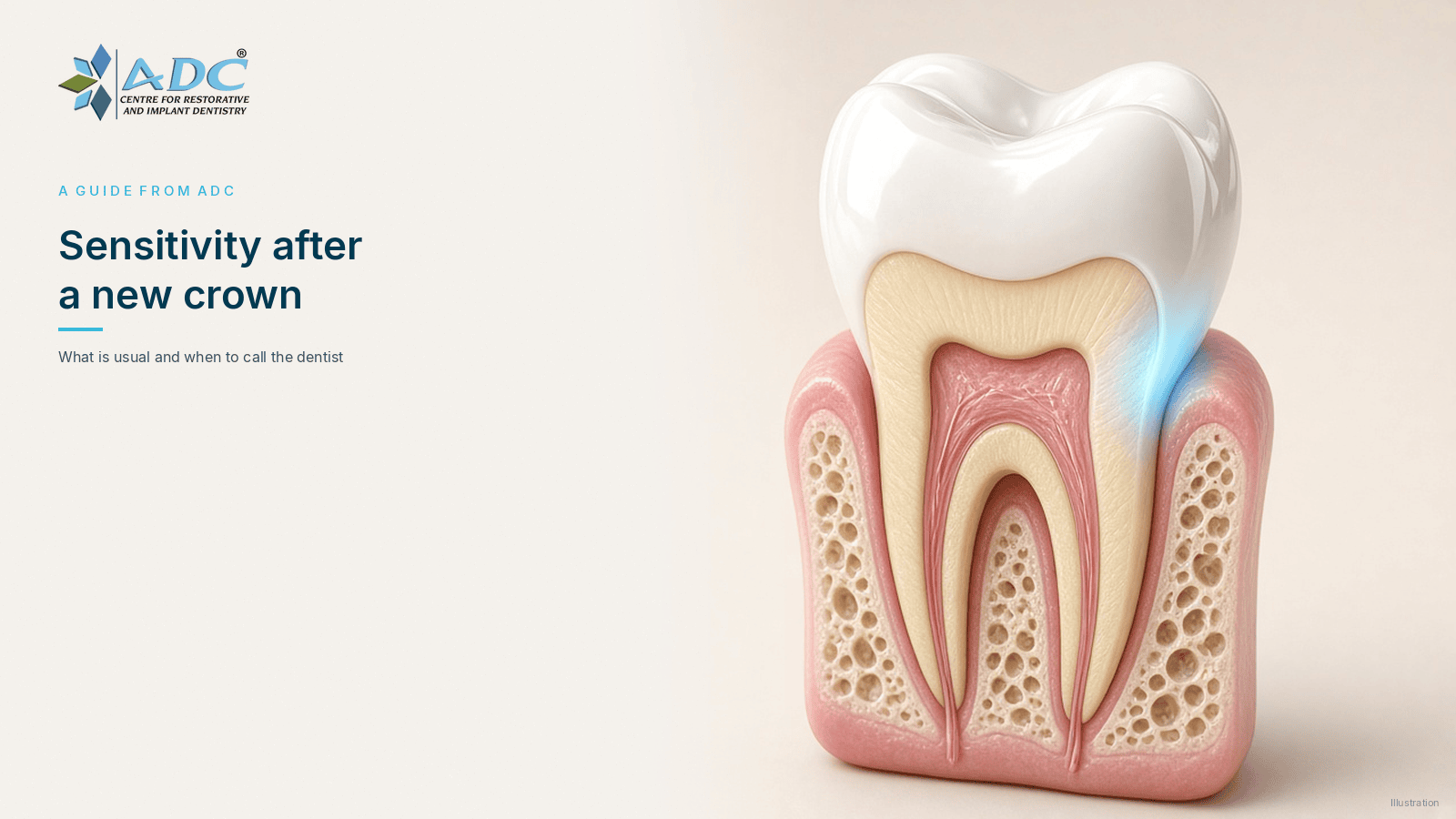 Sensitivity after a new crown: what is usual and when to call the dentist
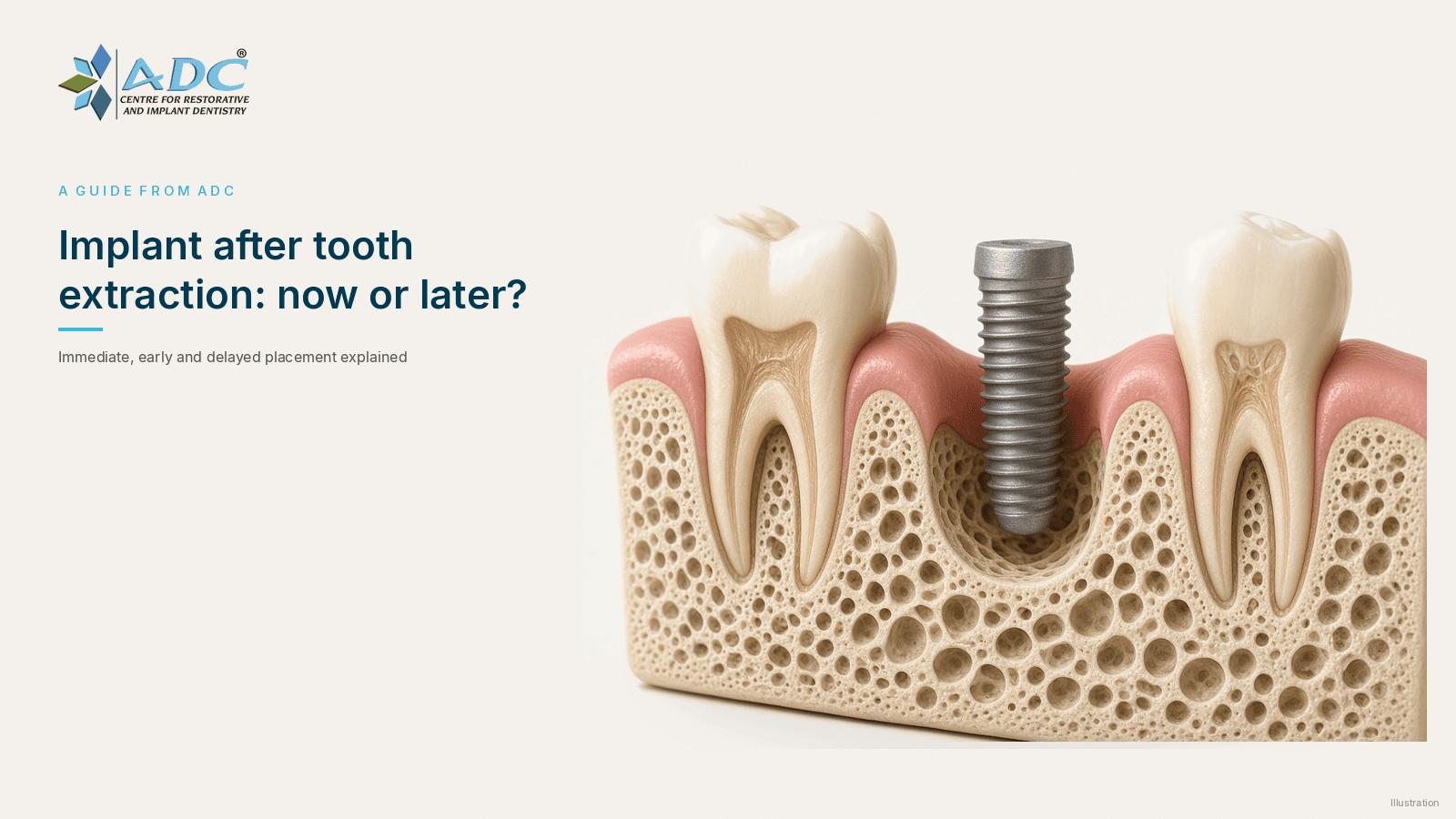 Dental implant after tooth extraction: immediate or delayed placement?
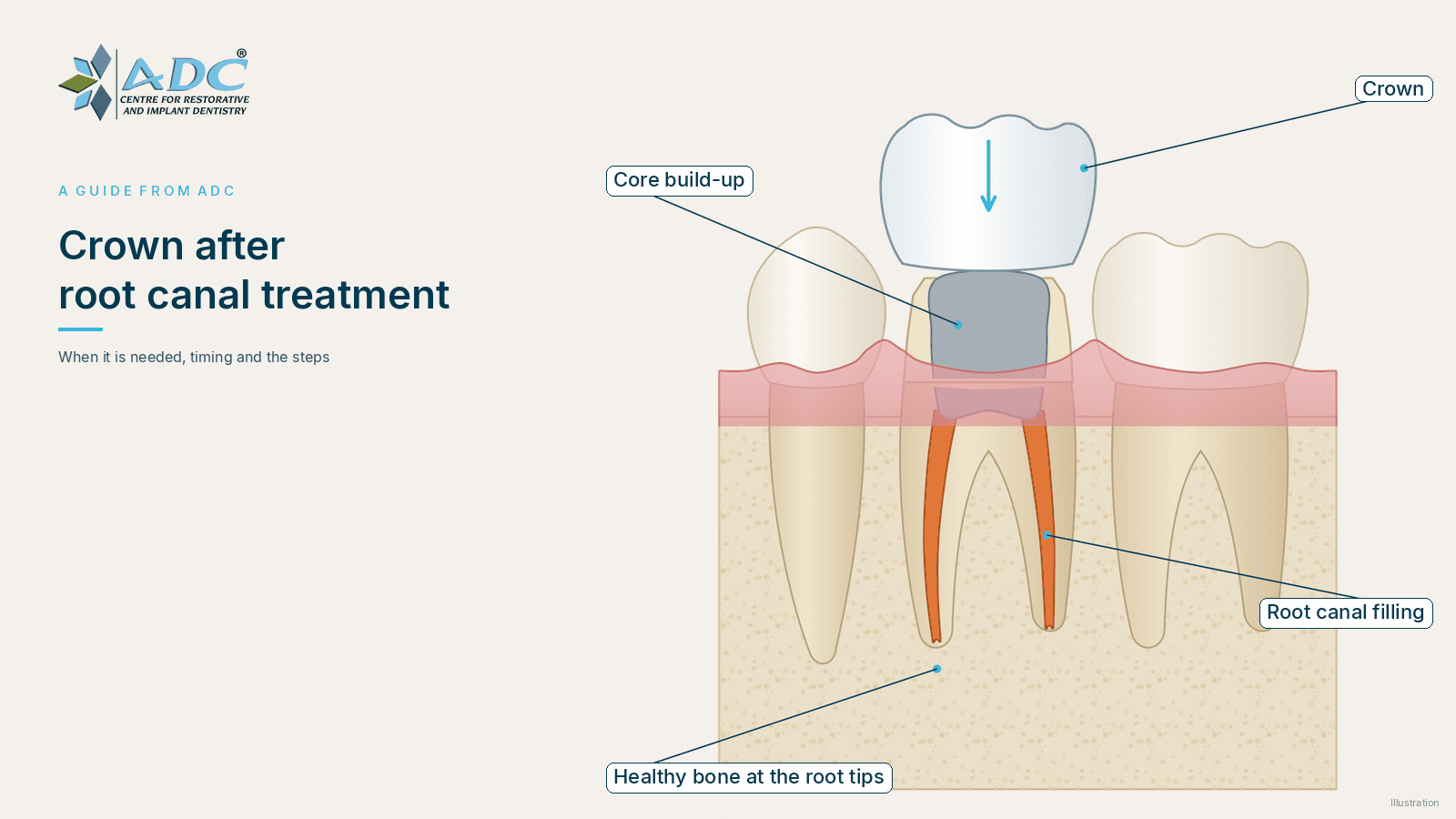 Do you need a crown after root canal treatment?