Loose dentures can turn eating, speaking and smiling into a worry. If your denture slips while you chew, clicks when you talk or rubs sore spots on your gums, you may start avoiding certain foods or reaching for adhesive every day. Implant-supported dentures use a small number of dental implants to hold a denture firmly in place. This guide explains why dentures become loose, how implant-supported dentures work, and what to expect if you are considering implant-supported dentures in Chandigarh.
Why do dentures become loose?
A conventional denture rests on the gums and is held mainly by suction and the shape of the ridge. After teeth are lost, the jawbone that supported them gradually shrinks. The ridge becomes lower and flatter, so a denture that once fitted well can start to move. This is often more noticeable in the lower jaw, where there is less surface for the denture to grip.
Other causes of dentures slipping while eating include:
- dentures that are many years old, with worn teeth or a worn fitting surface
- changes in the gums after weight loss or illness
- a dry mouth, which reduces suction
- a denture that was not relined after extractions healed
- damage, such as a cracked base
A loose denture can also cause ulcers and sore spots where it rubs. Not every loose denture needs implants: sometimes a reline or a new denture solves the problem. Our instructions for new denture wearers and our complete guide to dentures cover denture care and fit.
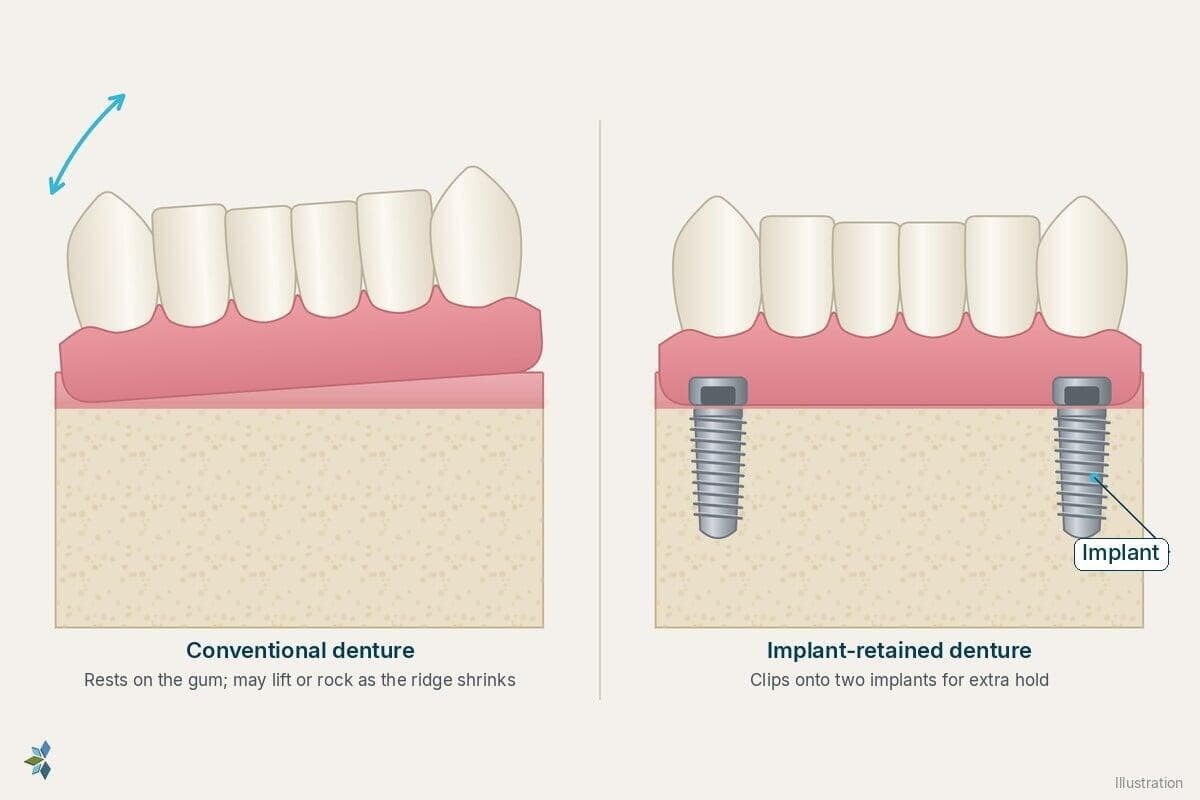
Illustration: a conventional denture rests on the gum and may lift or rock; an implant-retained denture clips onto implant attachments. Not a patient photograph.
What are implant-supported dentures?
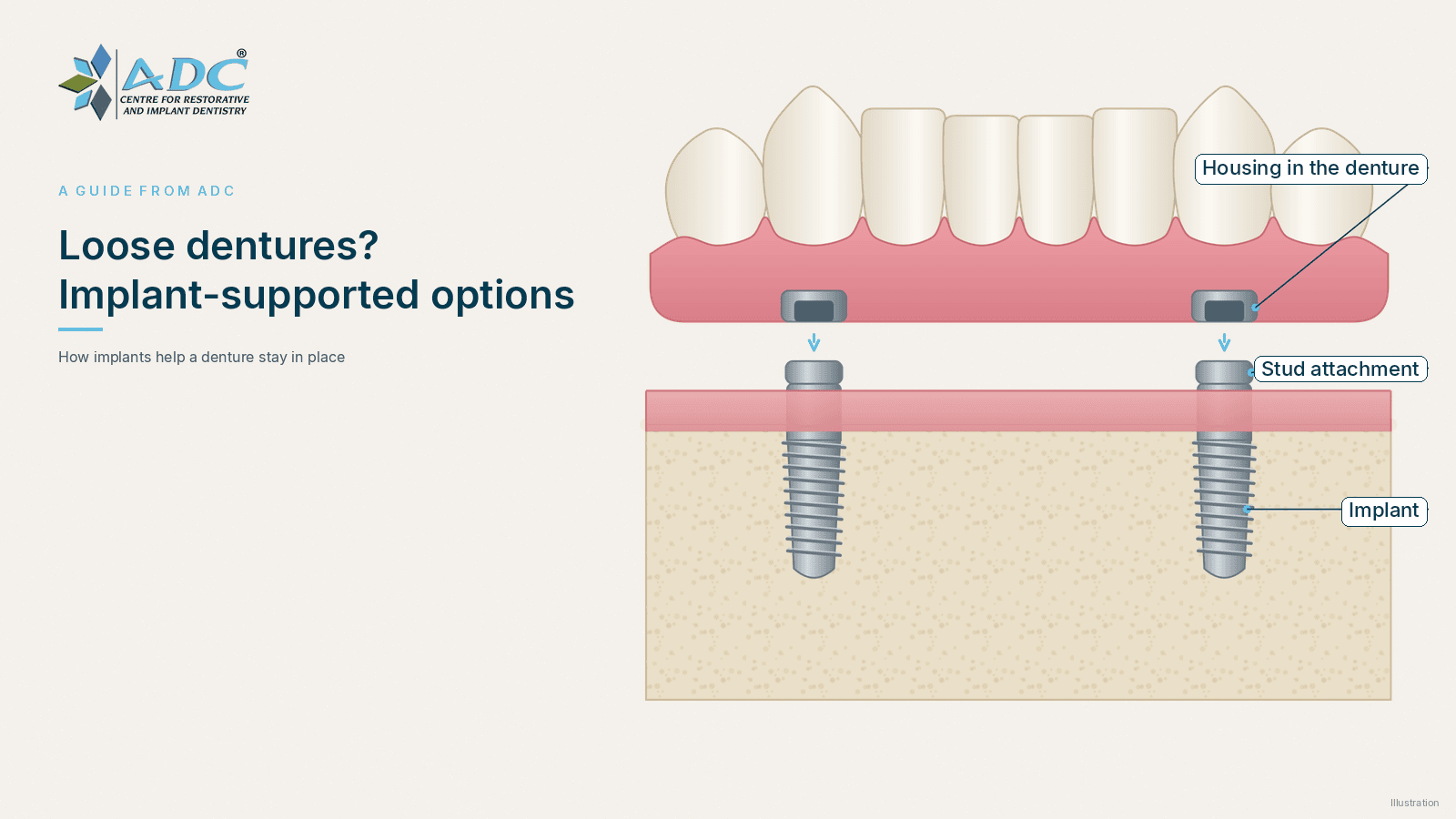
An implant-supported denture is a full denture that is held by dental implants placed in the jawbone. Small attachments on the implants connect to matching parts inside the denture, so it stays in place when you eat and speak. Depending on the design, the denture is either removable by you for cleaning ("snap-on" or overdenture) or fixed in place and removed only by the dentist.
For the lower jaw, an overdenture on 2 implants is widely recognised as a good standard of care for people with no lower teeth, according to international consensus statements. The upper jaw usually needs more implants, often four or more, because the bone is softer.
Types of implant-supported dentures
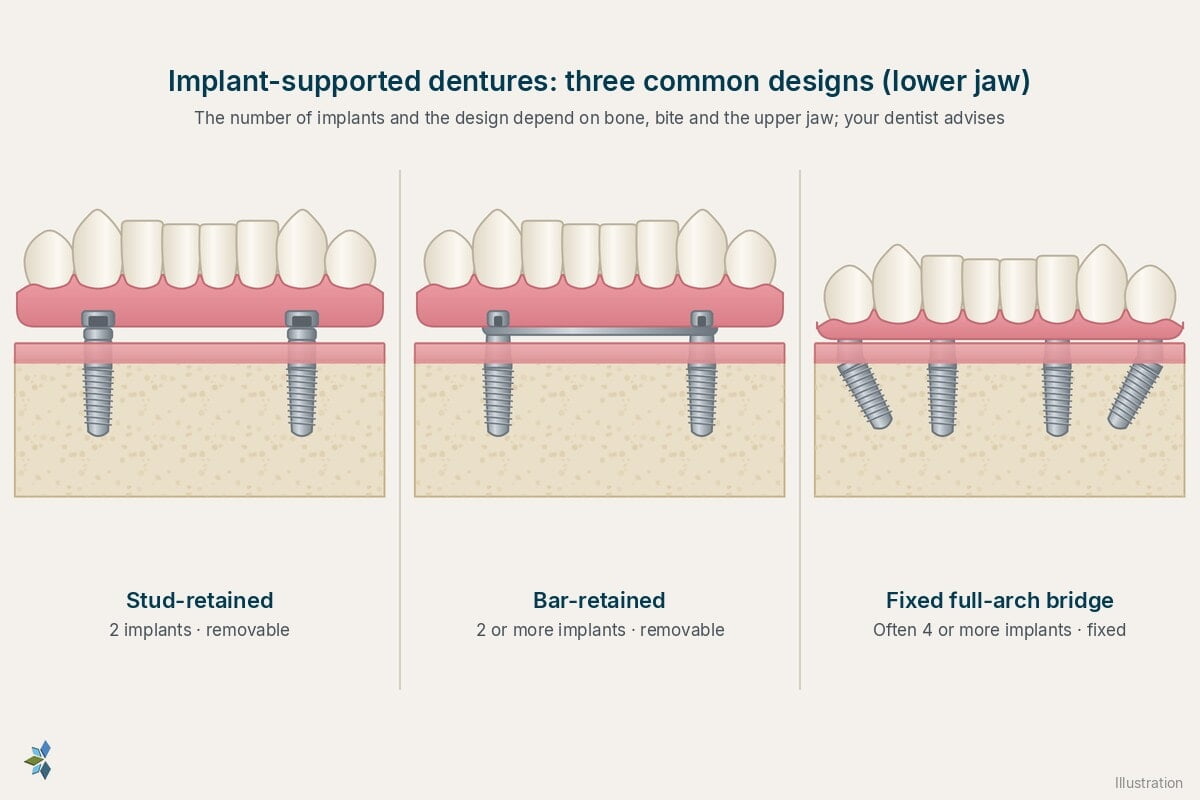
Illustration: three common designs for the lower jaw. The number of implants and the design depend on your bone, bite and the opposing jaw. Not a patient photograph.
Stud-retained (snap-on) dentures
Each implant carries a small stud attachment, and the denture has matching housings with replaceable nylon inserts. The denture clicks into place and is taken out for cleaning. This is often the simplest and most economical implant option for a loose lower denture.
Bar-retained dentures
A slim metal bar joins two or more implants, and clips inside the denture fit over the bar. This can give extra support where implants are angled or the ridge is very thin.
Fixed full-arch bridges
Four or more implants support a full arch of teeth that is screwed in place and not removed at home. This feels most like natural teeth but needs more implants and more detailed planning. See are you a candidate for All-on-4 implants? and All-on-6 or All-on-4.
How treatment works
Every plan is individual, but implant-supported denture treatment usually follows these steps:
- Consultation: your dentist examines your gums, ridge, bite and current denture, and reviews your medical history.
- Imaging and planning: X-rays or a CBCT (3D) scan show how much bone is available and where implants can safely go.
- Implant placement: the implants are placed under local anaesthesia. Your existing denture can often be adjusted and worn during healing.
- Healing: the bone bonds to the implants (osseointegration), which usually takes a few months.
- Fitting: the attachments are connected, and the new or adapted denture is fitted and checked.
- Reviews: regular check-ups keep the implants, gums and attachments healthy.
In selected cases, your existing denture can be converted to clip onto the implants, which can reduce cost and time.
Benefits of implant-supported dentures
- Better stability while eating: the denture is less likely to lift or slip, so many people chew more comfortably and enjoy a wider range of foods.
- Clearer speech: a secure denture is less likely to move or click when you talk.
- Fewer sore spots: less movement means less rubbing on the gums.
- Less need for adhesive: most patients no longer need denture fixative.
- Smaller upper dentures: with enough implants, an upper denture may be made without covering the whole palate.
- Jawbone support: implants load the bone and may help slow further shrinkage under them.
Are implant-supported dentures right for you?
You may be a good candidate if:
- your conventional denture often slips, especially the lower one
- you have lost all the teeth in one or both jaws, or soon will
- you have enough bone, or are suitable for a bone graft
- your gums and general health allow minor surgery
- you can clean the implants and attachments every day
Conditions such as uncontrolled diabetes, heavy smoking and some bone medicines can affect healing, so your dentist will review them first. If bone has been lost, see dental implants with bone loss.
Implant-supported dentures vs traditional dentures
A traditional denture is a practical, lower-cost option that needs no surgery, but it relies on the gums and ridge alone, so stability can fall as the bone changes. An implant-supported denture adds anchorage from the implants, which makes it much more stable for eating and speaking. It costs more than a conventional denture, but usually less than replacing every tooth with an individual implant. For a wider comparison, read dentures vs implants: how to choose the right option.
Caring for implant-supported dentures
- Take out a removable denture every day and clean it, and the attachments, with a soft brush.
- Clean around each implant or the bar with a soft toothbrush or interdental brushes.
- Do not sleep in the denture unless your dentist advises otherwise.
- Expect the nylon inserts to wear; they are usually replaced every so often to keep a firm click.
- Attend regular reviews so the fit, attachments and gums can be checked.
Frequently asked questions
Will implant-supported dentures stop my denture from slipping?
They give much more retention and stability than a conventional denture. How firm it feels depends on the number and position of implants, the attachment type and your anatomy.
Are implant-supported dentures removable?
Snap-on (stud or bar) dentures are removed by you for cleaning. Fixed full-arch bridges are removed only by the dentist.
How many implants will I need?
For a lower overdenture, two implants are common. Upper dentures and fixed bridges usually need four or more. Your scan and examination decide this.
Can my existing denture be used?
Sometimes, if it fits well and the teeth are in good condition. Otherwise a new denture is made.
Is the procedure painful?
Implants are placed under local anaesthesia. Some soreness and swelling for a few days is common and is usually managed with simple painkillers.
How long does treatment take?
It depends on your bone and healing. Many cases take a few months from implant placement to the final fit.
Book a loose denture assessment in Chandigarh
If your denture is loose or uncomfortable, an assessment at ADC – Centre for Restorative and Implant Dentistry can show whether a reline, a new denture or implant-supported dentures would suit you best. Book with Dr. Mohit Dhawan's team:
- Online booking: ADC Zoho Bookings
- Phone: +91-7087800016
- Email: help@theadc.dental
- Clinic: #1197 Sector 21-B, U.T, Chandigarh 160022
Mon–Fri 10:00 AM–6:30 PM (as published); Sat 10:00 AM–5:00 PM; Sunday closed. Learn more on our implant-supported dentures and dental implants in Chandigarh pages, or read Dr. Mohit Dhawan's profile.
For dentists: ADC's e-learning hub has a course on prosthetically driven implant planning, Beyond Osseointegration.
Reviewed by Dr. Mohit Dhawan.
References
- Feine JS, et al. The McGill consensus statement on overdentures. Mandibular two-implant overdentures as first choice standard of care for edentulous patients. Gerodontology. 2002 — PubMed 12164236
- Thomason JM, et al. Mandibular two implant-supported overdentures as the first choice standard of care for edentulous patients: the York Consensus Statement. Br Dent J. 2009 — PubMed 19696851
- Mishra SK, Chowdhary R. Patient's oral health-related quality of life and satisfaction with implant supported overdentures: a systematic review. J Oral Biol Craniofac Res. 2019 — PMC6723409
- Roy S, et al. A comparison of cost and cost-effectiveness analysis of two-implant-retained overdentures versus other removable prosthodontic treatment options for edentulous mandible: a systematic review. J Indian Prosthodont Soc. 2020 — PMC7335021
- American Dental Association, MouthHealthy — Dentures




 International Team for Implantology
 ISO 9001:2015 Certified
 OHSAS Certified
 Academy of Osseo-Integration
 Indian Prosthodontics Society
 Indian Endodontic Society
 Women Implantology Network
 Indian Dental Association






 Sensitivity after a new crown: what is usual and when to call the dentist
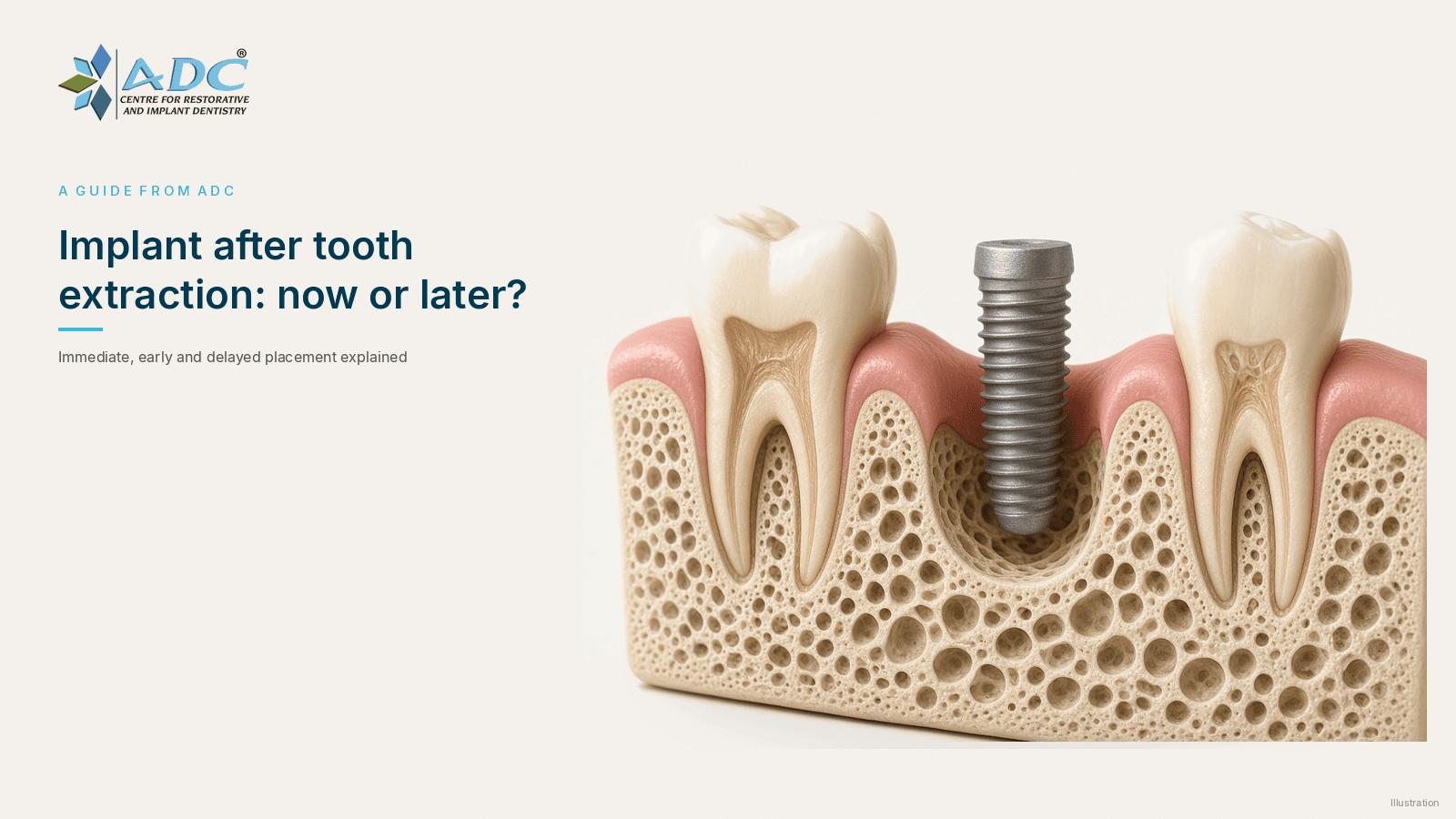 Dental implant after tooth extraction: immediate or delayed placement?
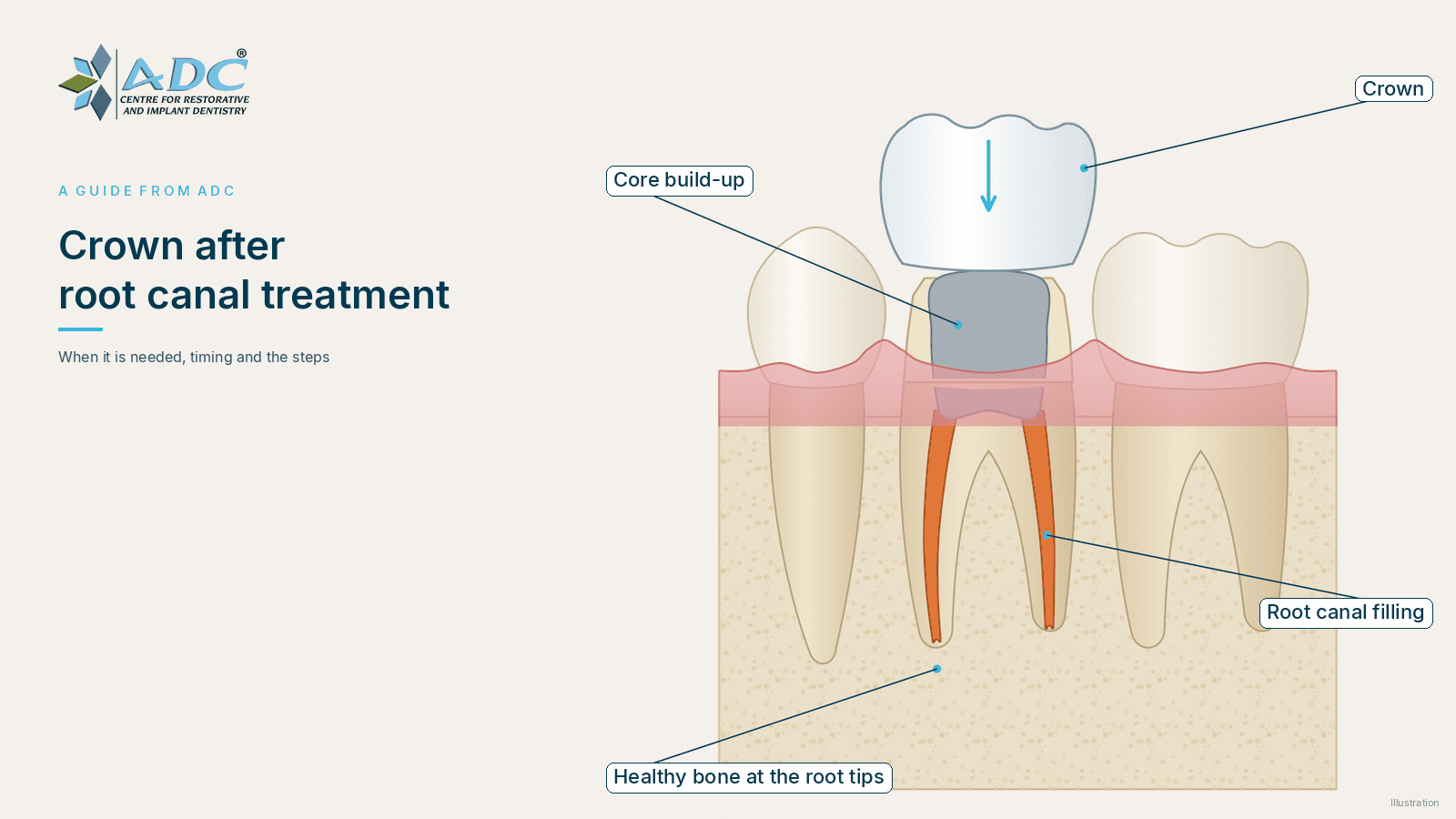 Do you need a crown after root canal treatment?