Many people who are considering dental implants have one main worry: are dental implants safe? For many healthy adults, implant treatment is a well-established, well-researched way to replace missing teeth. It is still surgery, though, and it carries some risks. This guide separates common myths from the facts, explains the real risks and who needs extra care, and describes how careful planning helps to keep treatment safe.
Are dental implants safe? The short answer
Dental implants have been used for decades. A review of studies that followed implants for ten years or more concluded that implant treatment is a safe option with high long-term survival (Moraschini and colleagues, 2015). An implant can stay in place and still have complications, so regular check-ups matter. Safety, however, depends on the individual: your general health, your gums and bone, habits such as smoking, the planning of the treatment and how well the implant is cleaned and checked afterwards.
Dental implant myths and facts
Myth 1: "Implants are risky and often fail"
Fact: Most implants heal into the bone and function for many years. Failures do happen, and they are more likely in people who smoke, have uncontrolled diabetes or untreated gum disease, or do not keep up maintenance. A careful assessment before treatment helps to identify and reduce these risks. Read more about common implant complications and how to avoid them.
Myth 2: "Implant surgery is very painful"
Fact: Implant surgery is usually done under local anaesthetic, so the area is numb during the procedure; you may still feel pressure. Afterwards, some soreness and swelling for a few days are common and are usually managed with simple pain relief and cold packs. For anxious patients, sedation may be discussed; see IV sedation and tips to overcome fear of the dentist.
Myth 3: "I am too old for implants"
Fact: Age alone is not usually a barrier. A systematic review concluded that advanced age by itself is not a reason to avoid implants, although some medical conditions and treatments need extra care (Schimmel and colleagues, 2018); these are listed below. What matters more is general health and the ability to clean the implant.
Myth 4: "Implants cannot get gum disease, so they need no care"
Fact: An implant cannot decay, but the gum and bone around it can become inflamed. Peri-implant mucositis is inflammation of the gum around an implant; peri-implantitis also involves loss of the supporting bone (Berglundh and colleagues, 2018). Daily cleaning and regular check-ups are essential. Read our home-care tips for healthy dental implants.
What are the real dental implant risks?
Possible problems include (Cleveland Clinic; American Academy of Periodontology):
- swelling, bruising or minor bleeding for a few days, which are common; infection, which is less common
- injury to a nerve in the lower jaw, which can cause numbness or tingling of the lip, chin or tongue that may settle or may last
- the drill or implant entering the sinus in the upper back jaw (a sinus lift is a separate, planned procedure used when bone height there is low)
- damage to neighbouring teeth or roots
- an implant that does not heal into the bone and may need to be removed
- inflammation and bone loss around the implant later on (peri-implantitis)
- mechanical problems such as a loose screw or a chipped crown (see loose implant treatment)
If an implant fails, replacement is sometimes possible after the site has healed and been assessed again. Read about failed dental implants: care, replacement and prevention.
Who needs extra care before implants?
Implants are possible for many people in these groups, but not for everyone; planning, timing or aftercare may need to change:
- People who smoke. Smoking is linked with higher implant failure and more complications (Chrcanovic and colleagues, 2015). Read about smoking and dental implants.
- People with diabetes, especially when it is poorly controlled.
- People with a history of gum disease, which should be treated and stable first (see gum disease treatment).
- People who have had radiotherapy to the head and neck or who take high-dose antiresorptive medicines (for example certain bisphosphonates or denosumab, often used in cancer care), which can affect healing of the jawbone.
- People who grind or clench their teeth, who may be advised to wear a night guard to reduce the load on the implant crown.
- People with limited bone, who may need bone grafting or a sinus lift before, or at the same time as, implant placement (see dental implants with bone loss).
There is no single list of people who must never have implants, but these factors are reasons to pause until your dentist has reviewed them. Always tell your dentist about your medical conditions and every medicine you take.
How careful planning lowers the risk
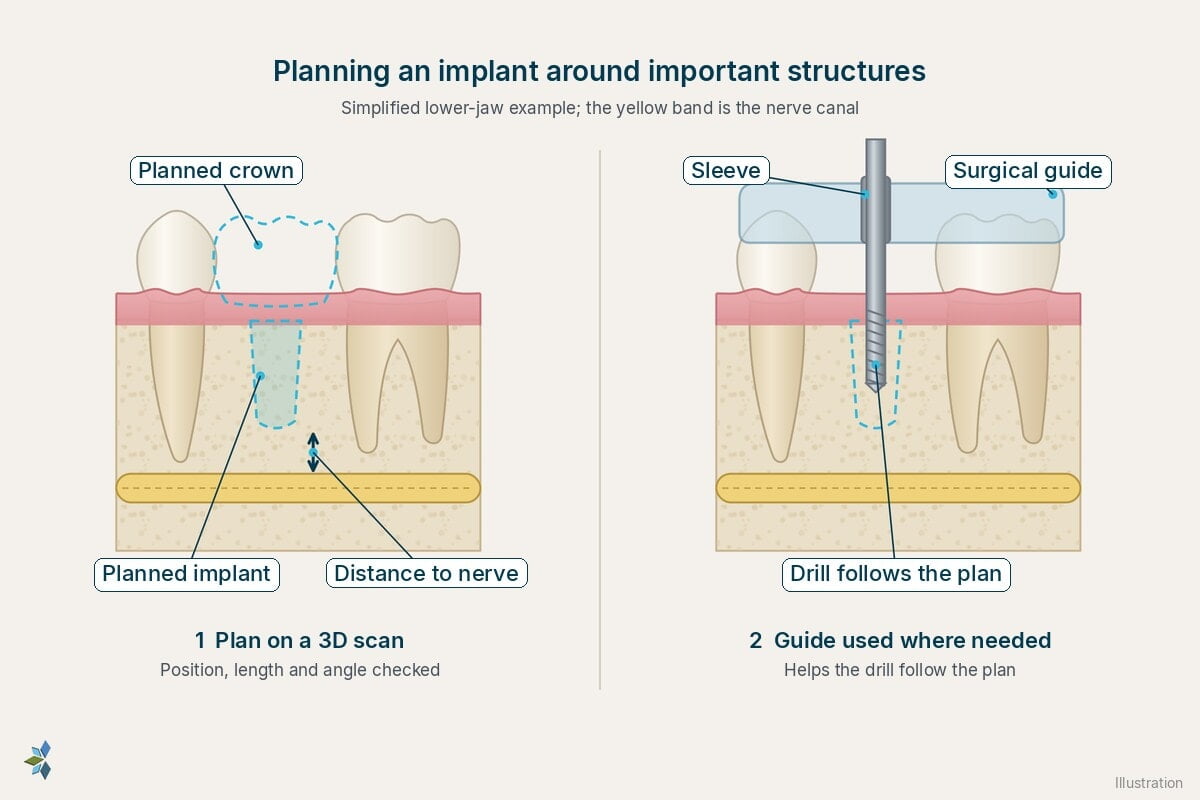
Illustration: a 3D scan lets the implant position be planned in advance, and a surgical guide can help transfer that plan to the mouth. Simplified. Not a patient photograph.
Careful planning usually includes:
- a full examination and a review of your medical history and medicines
- treating gum disease and decay before implant surgery
- a 3D cone beam CT (CBCT) scan where needed, to measure the bone and locate the nerve and sinus
- a surgical guide where needed, so that the implant is placed in the planned position
- bone grafting or a sinus lift when there is not enough bone
- a crown designed so it can be cleaned easily
- regular maintenance visits after treatment
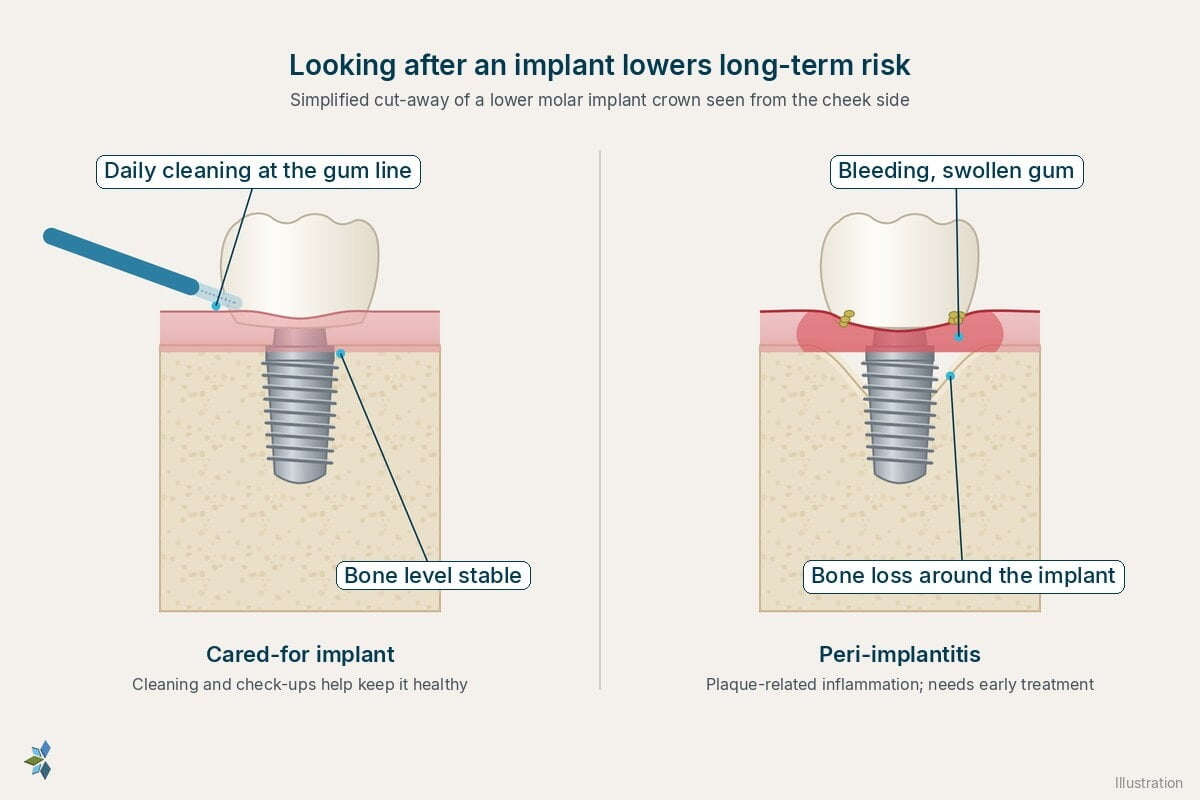
Illustration: daily cleaning and regular check-ups help to keep the gum and bone around an implant healthy. Simplified. Not a patient photograph.
Dental implant safety at ADC, Chandigarh
At ADC – Centre for Restorative and Implant Dentistry, implant treatment is led by Dr. Mohit Dhawan. Treatment starts with an examination and a review of your health, and uses a 3D CBCT scan and a surgical guide where needed. The risks, the alternatives and the steps for your case are explained before you decide. Learn more on our dental implants in Chandigarh page and in our complete guide to dental implants. If you are weighing implants against other options, see why replacing missing teeth matters. The clinic is in Sector 21, Chandigarh, within easy reach of Mohali, Panchkula and Zirakpur.
For dentists: the ADC E-Learning Hub offers Hardware Complications in Dental Implants and Beyond Osseointegration.
Frequently asked questions
Are dental implants safe for older adults?
Age alone is not usually a reason to avoid implants. Your general health, medicines and ability to clean the implant matter more, and your dentist will assess these.
Can my body reject a dental implant?
Dental implants are usually titanium, which the body generally tolerates well, and a true metal allergy is uncommon. When an implant fails, it is usually because it did not heal into the bone, or because of infection or overload; it is not rejected in the way a transplanted organ can be.
Is the implant procedure painful?
The area is numbed with local anaesthetic. You may feel pressure, but sharp pain during the procedure is unusual. Some soreness and swelling for a few days afterwards are common and usually settle with the pain relief your dentist advises.
Can I have implants if I smoke or have diabetes?
Sometimes, yes, but the risks are higher. Stopping smoking and keeping diabetes well controlled are likely to lower the risk; heavy smoking or poorly controlled diabetes may mean implants are better delayed. Your dentist will advise on your situation.
How much do dental implants cost?
The fee depends on the number of implants, any grafting and the type of crown, and is explained in a written estimate after your consultation. See our cost of dental implants post. Instalment and financing options are available; ask our team for details.
Book a consultation in Chandigarh
This article is general information, not advice for any individual. Please speak with your dentist about your own situation. If you are considering dental implants and would like to discuss whether they are safe for you, you are welcome to book a consultation with Dr. Mohit Dhawan at ADC – Centre for Restorative and Implant Dentistry:
- Online booking: ADC Zoho Bookings
- Phone: +91-708-780-0016
- Email: help@theadc.dental
- Clinic: ADC- Centre for Restorative and Implant Dentistry, 1197, Sector 21B, Sector 21, Chandigarh, 160022, India
Mon–Fri 10:00 AM–6:30 PM; Sat 10:00 AM–5:00 PM; Sunday closed. You can also request a consultation online.
Reviewed by Dr. Mohit Dhawan, MDS (Prosthodontics, Crown & Bridge and Implantology).
References
- Moraschini V, Poubel LA, Ferreira VF, Barboza ES. Evaluation of survival and success rates of dental implants reported in longitudinal studies with a follow-up period of at least 10 years: a systematic review. Int J Oral Maxillofac Surg. 2015 — PubMed 25467739
- Schimmel M, Srinivasan M, McKenna G, Müller F. Effect of advanced age and/or systemic medical conditions on dental implant survival: a systematic review and meta-analysis. Clin Oral Implants Res. 2018 — PubMed 30328186
- Berglundh T, Armitage G, Araujo MG, et al. Peri-implant diseases and conditions: consensus report of workgroup 4 of the 2017 World Workshop. J Periodontol. 2018 — PubMed 29926955
- Chrcanovic BR, Albrektsson T, Wennerberg A. Smoking and dental implants: a systematic review and meta-analysis. J Dent. 2015 — PubMed 25778741
- Cleveland Clinic. Dental implants — my.clevelandclinic.org
- American Academy of Periodontology. Dental implant procedures — perio.org



 International Team for Implantology
 ISO 9001:2015 Certified
 OHSAS Certified
 Academy of Osseo-Integration
 Indian Prosthodontics Society
 Indian Endodontic Society
 Women Implantology Network
 Indian Dental Association






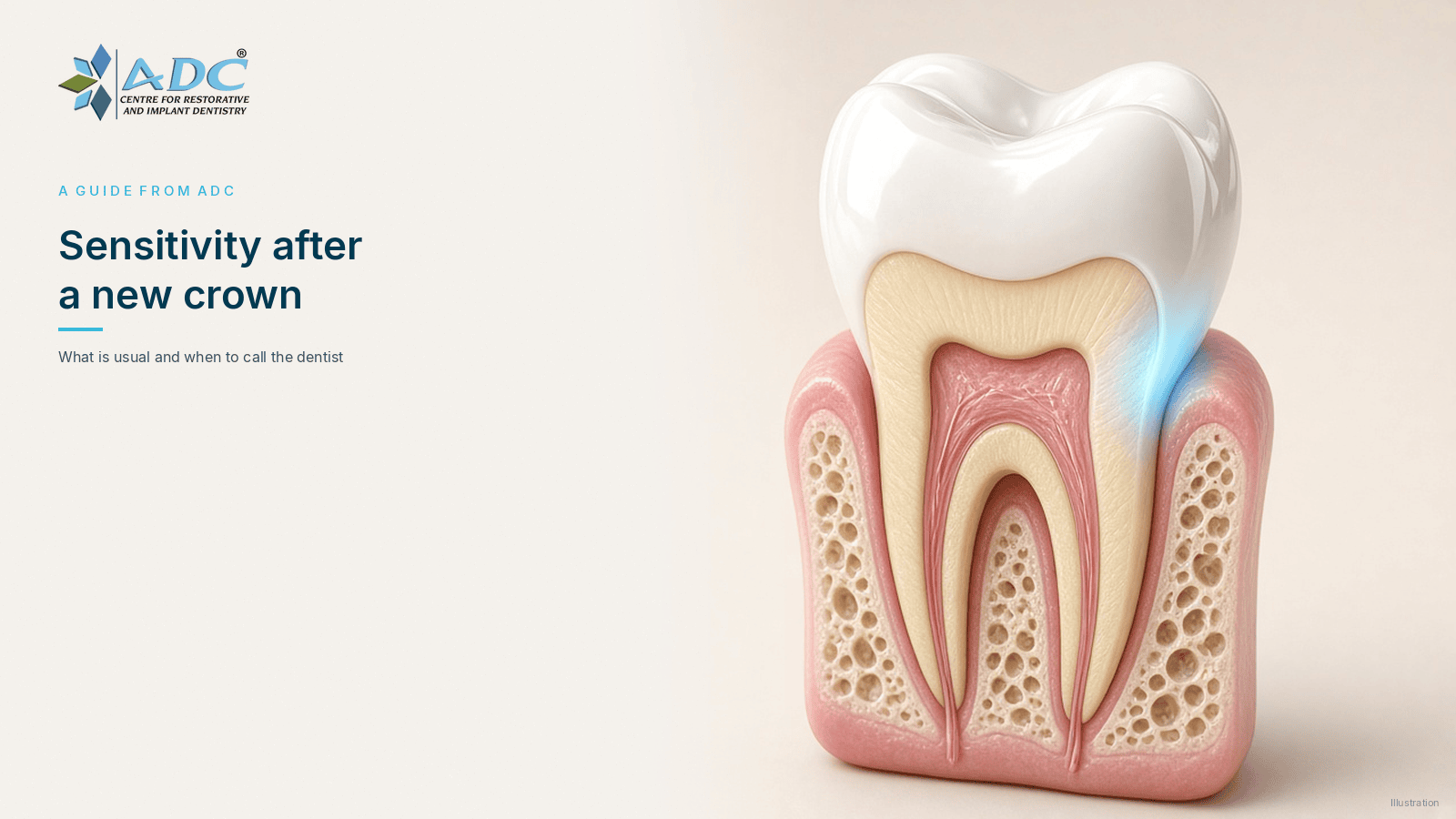 Sensitivity after a new crown: what is usual and when to call the dentist
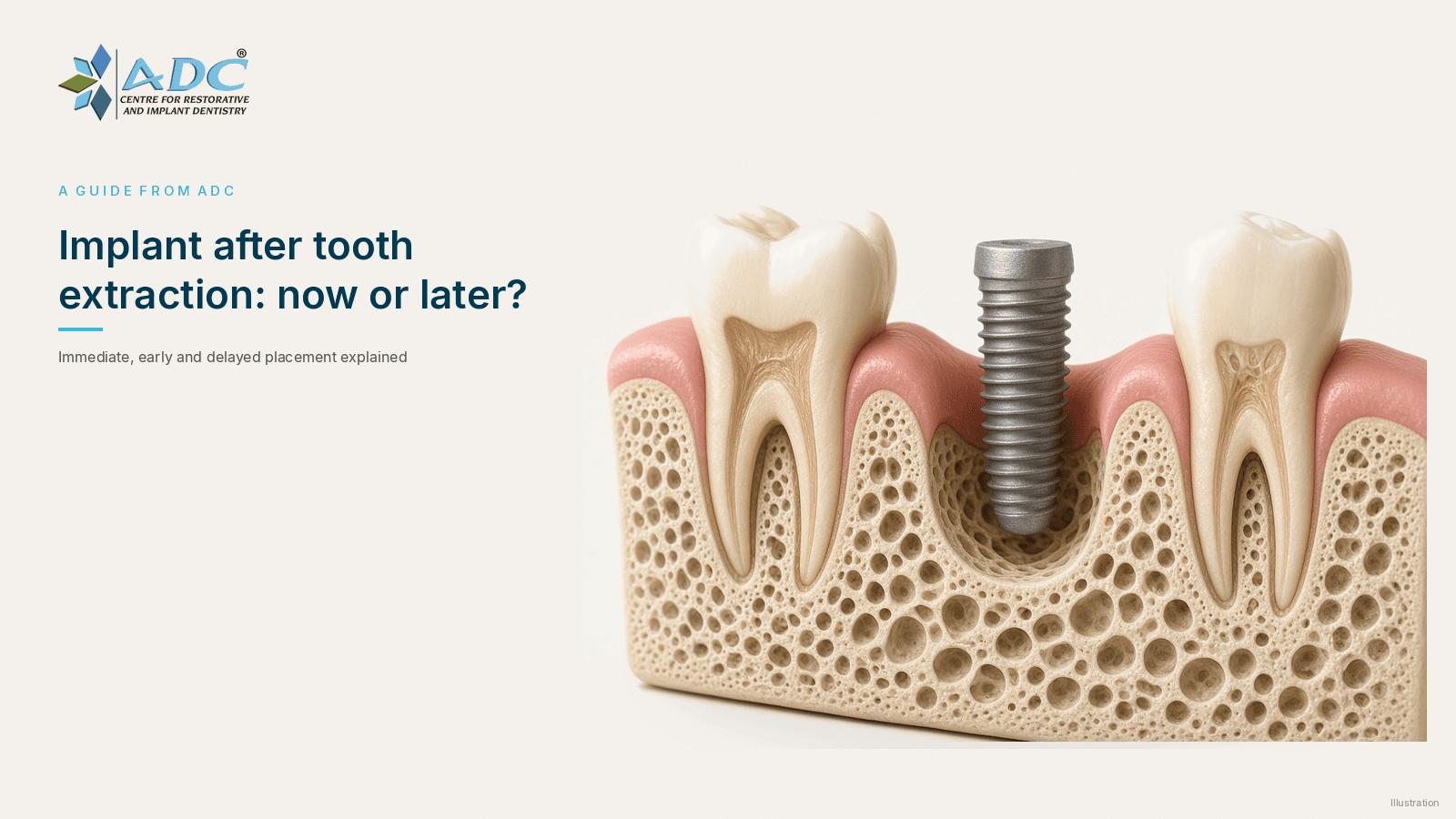 Dental implant after tooth extraction: immediate or delayed placement?
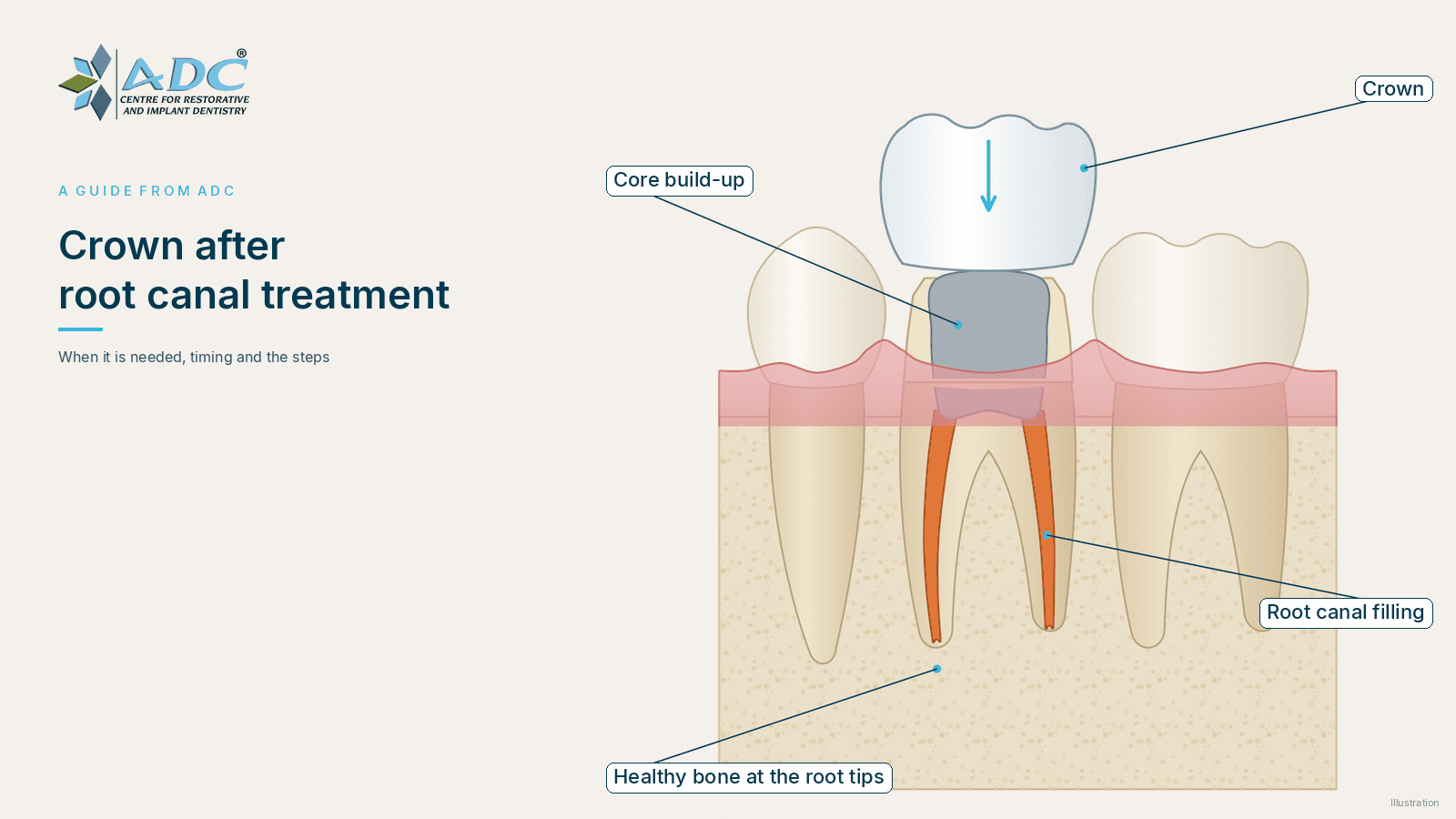 Do you need a crown after root canal treatment?